Mileage tracking is the practical starting point for the logbook method. This guide helps you record which kilometres were work-related or business use, which were private, and what percentage can be applied to actual car expenses. For employee claims, the ATO expenses for a car you own or lease guidance requires a qualifying car, work-related trips, unreimbursed expenses, and records.
Use the logbook method when you want to claim the work-related or business-use percentage of actual car expenses in Australia. The method is more work than cents per kilometre, but it can be better when you drive more than 5,000 work-related kilometres, your car running costs are high, or your work use is a large share of total driving. A valid logbook normally covers at least 12 continuous weeks and must be broadly representative of your travel.
This article is educational and is not tax, legal, payroll, employment, or financial advice. Australian car expense rules can change by income year, vehicle, ownership arrangement, business structure, employer payment, and fringe benefits tax treatment. Check the current ATO source and a qualified professional before relying on a claim.
Quick answer
The ATO logbook method uses this calculation: business or work-related kilometres divided by total kilometres, multiplied by 100, equals your business-use percentage. You then multiply eligible car expenses for the income year by that percentage. To support the claim, keep a logbook for at least 12 continuous representative weeks, odometer readings, trip details, receipts or other expense records, and the calculation notes behind the percentage.
Who can use the logbook method?
The logbook method is mainly for a car you own, lease, or hire under a hire-purchase arrangement. A car is generally a motor vehicle designed to carry less than one tonne and fewer than nine passengers, including the driver.
The method can apply in these common situations:
- an employee claiming work-related car expenses for a car they own, lease, or hire under hire-purchase
- a sole trader claiming business car expenses
- an eligible partnership claiming car expenses where at least one partner is an individual
The ATO motor vehicle expense calculation methods page separates sole traders and partnerships from companies and trusts. Companies and trusts use actual costs for motor vehicle expenses. Sole traders and partnerships also use actual costs for vehicles that are not cars, such as motorcycles, many vans, trucks, and vehicles that carry one tonne or more.
If your employer reimbursed the expense, do not treat the logbook method as permission to claim the same cost again. Employee deductions depend on the payment type, your income statement, and whether you personally incurred an unreimbursed work-related expense.
Logbook method versus cents per kilometre
The logbook method and cents per kilometre method answer the same broad question, but they use different evidence.
| Method | How it works | Best fit | Main limitation |
|---|---|---|---|
| Cents per kilometre | Eligible work-related or business kilometres multiplied by the ATO rate | Simpler claims up to the annual kilometre cap | Capped at 5,000 kilometres per car, and the rate already includes running costs and depreciation |
| Logbook method | Business-use percentage multiplied by eligible actual car expenses | Higher work use, high car costs, or claims above the cents per kilometre cap | Requires a representative logbook, odometer records, and expense evidence |
If both methods are available to you, compare the result before lodging your tax return. The simpler method is not always the better method, and the larger calculation is not useful unless the records can support it.
What your logbook must record
For a logbook-method claim, your records should show both the logbook period and the individual journeys that make up the percentage. The ATO logbook method guidance lists the core business logbook records, and the employee car expense guidance applies similar logbook and odometer requirements for work-related car claims.
Keep:
- the beginning and finishing dates for the logbook period
- the car’s make, model, engine capacity, and registration number
- opening and closing odometer readings for the logbook period
- total kilometres travelled during the logbook period
- business or work-related kilometres travelled during the logbook period
- the business-use or work-related use percentage for the period
- for each journey, the trip reason, travel dates, opening and closing odometer readings for that trip, and kilometres travelled
Record private driving too when it affects the total kilometres. The percentage only works if the denominator includes all kilometres for the logbook period, not just the trips you want to claim.
The 12-week logbook period
Your first logbook under the method must cover at least 12 continuous weeks during the income year. The period should represent your normal driving pattern. If you pick an unusually busy or unusually quiet period, the percentage may not fairly support the annual claim.
If you start using the car for business or work-related purposes less than 12 weeks before the end of the income year, the business logbook guidance allows the 12-week period to continue into the next income year so it covers the required continuous period.
A completed logbook can generally be valid for five years. That does not mean the rest of the recordkeeping stops. In later income years, keep odometer readings for the full claim period and keep using a percentage that still reflects your actual work-related or business use. Start a new 12-week logbook if your job, worksite pattern, business activity, home location, vehicle use, or other circumstances change enough that the old logbook is no longer representative.
If you want to use the logbook method for two or more cars, keep a logbook for each car and make sure the logbooks cover the same 12-week period.
How to calculate the business-use percentage
Use the logbook period to calculate the work-related or business-use percentage:
business kilometres / total kilometres x 100 = business-use percentage
Example:
| Logbook figure | Amount |
|---|---|
| Total kilometres in the 12-week period | 6,400 km |
| Business or work-related kilometres | 3,840 km |
| Business-use percentage | 60% |
The same percentage is then applied to eligible car expenses for the income year, provided the logbook period represents the broader year.
How to calculate the deduction
Once you know the percentage, add up eligible car expenses for the income year and multiply by the business-use percentage.
Example:
| Claim figure | Amount |
|---|---|
| Eligible car expenses for the income year | $8,200 |
| Business-use percentage from the logbook | 60% |
| Deductible amount | $4,920 |
There is no 5,000 kilometre cap under the logbook method. The limit is practical and evidentiary: the trips must be work-related or business use, the logbook must support the percentage, and the expenses must be eligible and documented.
Car expenses you can include
The logbook method lets you claim the eligible business-use percentage of actual car expenses. Common categories include:
| Expense category | Record to keep |
|---|---|
| Fuel and oil | Receipts where available, or an allowed reasonable estimate supported by odometer records |
| Registration | Registration records and payment evidence |
| Insurance | Policy and payment records |
| Servicing, repairs, tyres, and maintenance | Receipts or tax invoices |
| Lease payments or eligible finance interest | Lease, loan, and payment records |
| Electricity for an electric car | Records showing the expense and business/private apportionment |
| Decline in value of the car | Purchase records, depreciation method, effective life, and business-use percentage |
Do not claim private-use costs. Keep the car’s upfront price, loan principal, and improvement costs out of ordinary running expenses. Those capital costs are handled differently, and only eligible decline in value belongs in the logbook-method calculation.
Fuel, oil, receipts, and odometer records
The ATO motor vehicle expense records guidance lists the wider records businesses generally need for motor vehicle expenses, including kilometres for business and private use, receipts, loan or lease documents, tax invoices, registration papers, and calculation details.
For fuel and oil under the logbook method, keep actual receipts where you can. If you do not have every fuel and oil receipt, use odometer readings for the relevant period to support any reasonable estimate allowed by ATO guidance. For other car expenses, keep written evidence such as receipts, invoices, contracts, and payment records.
Depreciation and the car limit
The logbook method can include decline in value of the car when you are eligible to claim it. For employees, depreciation applies only where the logbook method is used and the car is owned, leased, or hired under hire-purchase. For business claims, depreciation is generally included only for the business-use portion.
If the vehicle is a car, the depreciation calculation may be limited by the car cost limit. For the 2025-26 income year, the ATO car threshold update lists the car limit for depreciation as $69,674 for a car first used or leased in that income year.
Depreciation details can become technical when GST, luxury cars, small business concessions, instant asset write-off rules, leased luxury cars, or mixed private/business use are involved. Keep the purchase documents, finance documents, depreciation schedule, odometer records, and business-use support together.
Employees, sole traders, and business structures
Employees and sole traders can both use the logbook method in Australia, but the surrounding rules are not identical.
| Reader | What to check |
|---|---|
| Employee | You used a qualifying car you own, lease, or hire under hire-purchase; the travel was work-related; you paid the expense yourself; you were not reimbursed; and your tax return records support the claim |
| Sole trader | The vehicle is a car; the travel was for business; the logbook period is representative; and expense records support the business-use percentage |
| Partnership | At least one partner is an individual, the vehicle is a car, and the partnership records support the method |
| Company or trust | The logbook method is not the normal calculation method for motor vehicle deductions; use actual costs and consider FBT if a vehicle is available for private use |
If an employer provides a car or makes it available for private use, fringe benefits tax may be relevant to the employer. That is separate from an employee claiming unreimbursed work-related car expenses for their own car.
What counts as work-related or business driving?
The logbook method does not turn private travel into work-related travel. Classify trips before you calculate the percentage.
Work-related or business trips commonly include:
- travelling between separate workplaces
- driving from your usual workplace to a client, meeting, conference, or temporary worksite
- collecting supplies or delivering items for work
- travelling directly between two jobs on the same day
- itinerant work where your duties regularly require travel between locations
Normal home-to-work travel is generally private. Limited exceptions can apply, but they need source-supported facts, such as specific home-base or bulky-equipment circumstances. If a trip is partly private, split or exclude the private portion.
How MyCarTracks mileage tracking helps with logbook records
The ATO accepts electronic logbooks when the required information is recorded. A paper diary, spreadsheet, or app can all work if the records are complete, readable, and retained.
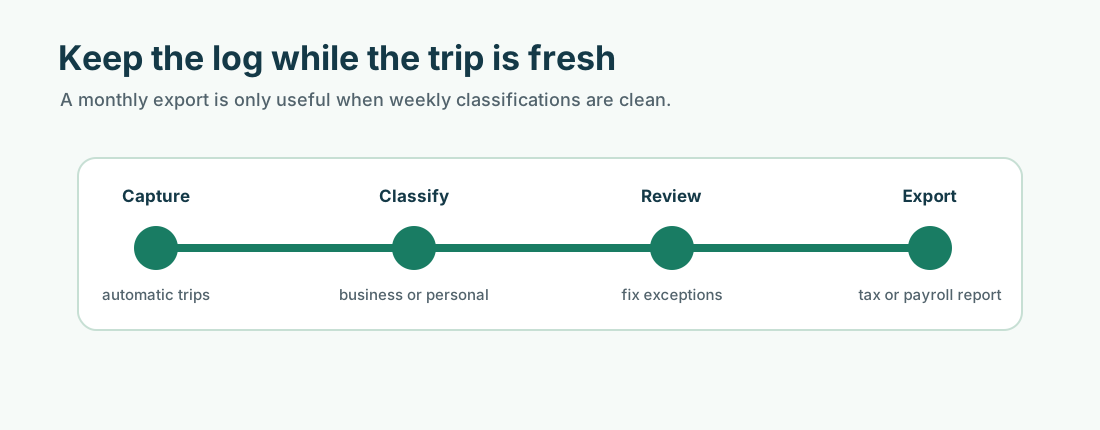
MyCarTracks automatic mileage tracking can help by capturing trips, separating business and personal driving, and exporting records by vehicle, driver, date, and purpose. That makes the logbook method easier to review because the trip list, odometer support, and business-use percentage are built during the year instead of reconstructed later.
For teams, MyCarTracks fleet tracking can help managers review vehicle activity and keep driver records consistent before payroll, finance, or an accountant needs them.
Records to keep after the logbook is complete
Keep the logbook itself, odometer readings, expense evidence, and calculation notes. General ATO recordkeeping guidance requires records that prove the expense and explains that records may be paper or electronic. Business motor vehicle expense records are generally kept for five years, and employee logbook and odometer records need to be retained for five years after the end of the latest income year that relies on them.
A practical logbook-method file includes:
- the completed 12-week logbook
- opening and closing odometer readings for each income-year claim period
- receipts, invoices, tax invoices, loan or lease documents, insurance records, registration records, and service records
- purchase and depreciation records if decline in value is included
- notes showing the business-use percentage and how the deduction was calculated
- employer payment records if an allowance, reimbursement, or salary-packaging arrangement may affect the claim
Common mistakes to avoid
- Using a 12-week period that does not represent the income year.
- Recording only business trips and leaving private kilometres out of the total.
- Reusing a five-year logbook after the work pattern changed.
- Claiming expenses that an employer already reimbursed.
- Claiming the car purchase price, loan principal, or improvements as running costs.
- Adding the same cost twice, such as claiming cents per kilometre and logbook expenses for the same car and same period.
- Keeping receipts but no odometer readings or trip records to support the percentage.
- Using the logbook method for a vehicle or business structure that should use actual costs.
FAQ
How long does an ATO logbook need to run?
The logbook must run for at least 12 continuous weeks and be broadly representative of your travel. If the car starts being used for business or work-related purposes less than 12 weeks before the end of the income year, the 12-week period may continue into the next income year.
How long is a logbook valid in Australia?
A logbook can generally be valid for five years. You still need odometer readings and supporting records in later years, and you need a new logbook if the old one no longer represents your work-related or business driving.
Do I need to record personal trips?
Yes, when the car has both private and business or work-related use. The business-use percentage depends on total kilometres, so private driving must be captured in the total distance for the logbook period.
Can employees use the logbook method?
Employees can use the logbook method for work-related car expenses when they meet the employee deduction conditions: a qualifying car they own, lease, or hire under hire-purchase, work-related trips, unreimbursed costs, and records. If the employer reimbursed the expense or provided a car, check the payment and FBT treatment before claiming.
Can I use the same logbook for two cars?
No. Keep a separate logbook for each car. If you use the logbook method for two or more cars, the logbook period for each car should cover the same 12-week period.
What if my driving pattern changes?
Start a new logbook if the old percentage is no longer representative. Common triggers include changing jobs, moving home, changing worksites, adding a new client route, changing business activities, or using the car differently.
More logbook method questions
Do I need receipts for every car expense?
Keep receipts or other written evidence for car expenses wherever required. For fuel and oil, ATO guidance allows actual receipts or, where receipts are missing, a reasonable estimate supported by odometer readings. For other expenses, keep receipts, invoices, contracts, and payment records.
Is the logbook method always better than cents per kilometre?
No. The logbook method can produce a larger deduction when work use or actual car costs are high, but it also needs stronger records. Cents per kilometre can be simpler for lower-kilometre claims within the 5,000 kilometre cap.
Where to go next
- ATO Mileage Guide for Australia for the broader Australian mileage, deduction, reimbursement, and FBT overview
- Car Expense Tax Deductions (Australia) when you are choosing between cents per kilometre, logbook, and actual costs
- Current ATO Cents Per Kilometre Rate (Australia) when a simpler rate-based claim may be enough
- Mileage Reimbursement for Employees (Australia) when an employer allowance or reimbursement affects the deduction
Sources
- ATO: Expenses for a car you own or lease
- ATO: Logbook method
- ATO: Motor vehicle expense calculation methods
- ATO: Motor vehicle expense records you need to keep
- ATO: myTax 2025 work-related car expenses
- ATO: Expenses for a vehicle that isn’t yours or isn’t a car
- ATO: Changes to car thresholds from 1 July
- ATO: Records you need to keep