Use mileage tracking to separate claimable work kilometres from private driving before you choose an ATO car expense method. If you use your own car for work in Australia, your deduction usually starts with two checks: the trip must be work-related, and you must have paid the cost yourself without being reimbursed. The ATO expenses for a car you own or lease guidance also requires the vehicle to meet the car definition and be owned, leased, or hired by you under a hire-purchase arrangement.
Once the trip and vehicle qualify, choose the method that fits your records. Employees generally choose between the cents per kilometre method and the logbook method. Sole traders and some partnerships can use those methods for cars, while companies, trusts, and non-car vehicles use actual costs.
The method matters because it changes both the calculation and the evidence. Cents per kilometre is simpler and capped. The logbook method can support a larger claim when work use or running costs are high, but it needs a representative logbook, odometer readings, and expense records. Actual costs are stricter again and are mainly for business structures or vehicles that cannot use the normal car methods.
This article is educational and is not tax, legal, payroll, employment, or financial advice. Australian car expense rules can change by income year, vehicle type, business structure, employer payment, and fringe benefits tax treatment. Check the current ATO source and a qualified professional before relying on a calculation.
Quick answer
Use the ATO cents per kilometre method when you have up to 5,000 eligible work-related or business kilometres for a car and want a simple rate-based deduction. Use the logbook method when you can keep a 12-week representative logbook and want to claim the work-related percentage of actual car costs. Use actual costs when your business structure or vehicle type requires it, such as a company, trust, motorcycle, truck, or vehicle that is not a car.
Which ATO car expense method can you use?
The right method depends on who is claiming and what vehicle is being used.
| Claim situation | Method options | Main record burden |
|---|---|---|
| Employee using a car they own, lease, or hire under hire-purchase | Cents per kilometre or logbook method | Work-trip support, ownership or lease evidence, and method-specific records |
| Sole trader using a car | Cents per kilometre or logbook method | Business kilometre support or logbook percentage plus car expense records |
| Partnership using a car where at least one partner is an individual | Cents per kilometre or logbook method | Same method records as a sole trader |
| Sole trader or partnership using a vehicle that is not a car | Actual costs method | Actual expense records and business/private use support |
| Company or trust | Actual costs method | Receipts, tax invoices, vehicle records, and business/private use support |
For this purpose, a car is a motor vehicle that carries less than one tonne and fewer than nine passengers, including the driver. Motorcycles, scooters, many larger utes, trucks, and minibuses are not handled under the normal work-related car expense methods.
Cents per kilometre method
The cents per kilometre method is the simplest ATO car expense method. For the 2024-25 and 2025-26 income years, the ATO rate is 88 cents per kilometre. The method is capped at 5,000 work-related or business kilometres per car, per year.
The calculation is:
eligible kilometres x cents per kilometre rate = deduction
Example: 3,000 eligible kilometres in the 2025-26 income year at 88 cents per kilometre gives a deduction of $2,640.
The ATO cents per kilometre method says the rate takes car running expenses and depreciation into account. That means you do not add fuel, registration, insurance, servicing, repairs, maintenance, or decline in value again for the same car under this method.
You do not need receipts for every running cost when you use cents per kilometre. You still need a believable record showing how you worked out the work-related kilometres. A diary, calendar, job schedule, trip export, or mileage tracking app report is stronger than a year-end estimate.
Logbook method
The logbook method uses your work-related or business-use percentage instead of a fixed kilometre rate. It can produce a larger deduction when you drive more than 5,000 eligible kilometres, have high running costs, or need to claim depreciation and other actual car costs.
The basic calculation is:
business kilometres / total kilometres x 100 = business-use percentage
Then:
total eligible car expenses x business-use percentage = deduction
Example: If your 12-week logbook shows 4,500 business kilometres out of 6,000 total kilometres, your business-use percentage is 75%. If eligible car expenses for the year are $7,200, the deduction is $5,400.
The ATO logbook method requires a logbook for at least 12 continuous weeks that represents your travel for the year. A logbook can generally be valid for five years, but you need odometer readings in the later years and a new logbook if your work or business driving pattern changes.
Your logbook should show the logbook period, odometer readings, total kilometres, work-related kilometres, business-use percentage, car details, and each journey’s reason, dates, odometer readings, and kilometres travelled. You also need evidence of fuel and oil costs or odometer readings that support a reasonable estimate, plus evidence for other car expenses.
Actual costs method
The actual costs method is used when the normal car methods are not available. The ATO motor vehicle expense calculation methods page says companies and trusts must use actual costs regardless of vehicle type. Sole traders and partnerships also use actual costs for vehicles that are not cars.
Actual costs means you claim the business portion of real vehicle expenses, supported by records. Common records include receipts, tax invoices, registration papers, loan or lease documents, fuel and servicing records, odometer readings, and notes showing how you separated business and private use.
This method is not a shortcut around the logbook rules. It usually needs enough vehicle-use records to show the work or business portion of the expenses. If a vehicle is used partly for private travel, only the work-related or business portion belongs in the claim.
What car expenses can be deducted?
The deductible car expenses depend on the method.
| Expense | Cents per kilometre | Logbook method | Actual costs method |
|---|---|---|---|
| Fuel and oil | Covered by the rate | Business-use percentage, with receipts or odometer-based estimate | Business-use percentage, with actual records |
| Registration | Covered by the rate | Business-use percentage | Business-use percentage |
| Insurance | Covered by the rate | Business-use percentage | Business-use percentage |
| Servicing, repairs, tyres, and maintenance | Covered by the rate | Business-use percentage | Business-use percentage |
| Interest or lease costs | Covered by the rate | Business-use percentage where eligible | Business-use percentage where eligible |
| Depreciation or decline in value | Covered by the rate | Business-use percentage where eligible | Business-use percentage where eligible |
Do not claim private costs. You also cannot claim the purchase price of the car, loan principal, or improvement costs as ordinary running expenses. Depreciation is handled separately when the method allows it.
Parking fees and tolls for work-related trips may be deductible, but keep them separate from private travel and commuting. If a toll or parking cost relates to a vehicle that is not yours or is not a car, it may sit under work-related travel expenses rather than work-related car expenses.
Depreciation and the car limit
Depreciation, also called decline in value, can be relevant under the logbook or actual costs method. It is not an extra deduction under cents per kilometre because the rate already includes depreciation.
For 2025-26, the ATO car threshold update lists the car limit for depreciation as $69,674. If the car costs more than the limit, the limit is the highest value you can generally use to calculate depreciation for a car first used or leased in that income year.
Depreciation can become technical, especially for GST-registered businesses, luxury cars, small business depreciation incentives, and mixed-use vehicles. Keep the purchase documents, finance records, depreciation schedule, and business-use support together.
Which trips count as work-related?
A car expense claim is only as strong as the trip classification behind it. Work-related travel commonly includes driving:
- between separate workplaces
- from your regular workplace to a client, meeting, conference, or temporary worksite
- to collect supplies or deliver items for work
- between jobs on the same day, where the trip is not via home
- as part of itinerant work where your duties regularly move between locations
- from home to an alternative workplace in limited circumstances
Normal home-to-work travel is generally private, even if the distance is long, the hours are unusual, or you need the job to earn income. The ATO trips you can and can’t claim guidance explains common claimable trips and limited home-to-work exceptions, including some bulky-tool and home-base situations.
What if your employer reimbursed you?
If your employer reimbursed the actual expense and the reimbursement is not assessable income to you, you generally cannot claim that same expense again. The ATO allowances and reimbursements guidance separates reimbursements from allowances: reimbursements pay back actual expenses already incurred, while allowances are separately identified payments.
A car allowance is not the same thing as exact reimbursement. If your employer pays an allowance, check your income statement, payslip, employer policy, and the ATO withholding treatment before deciding whether a deduction is still available. The tax return claim still needs eligible work-related trips and records.
Five-step claiming workflow
Use this workflow before lodging the car expense line in your tax return or business records.
- Confirm the vehicle category. Check whether the vehicle is a car and whether you own, lease, or hire it under hire-purchase.
- Remove non-work travel. Exclude normal commuting and private use unless a specific ATO exception applies.
- Pick the method. Compare cents per kilometre with logbook where both are available. Use actual costs when your structure or vehicle requires it.
- Calculate the claim. Use the right income-year rate, cap, business-use percentage, or actual-cost apportionment.
- Keep the file. Store trip records, odometer readings, receipts, invoices, registration records, loan or lease documents, and calculation notes.
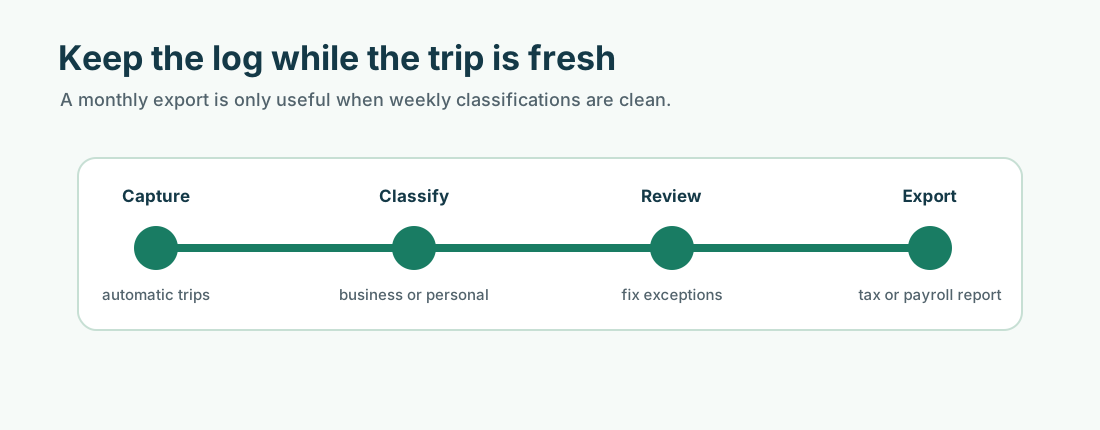
If you use MyCarTracks for mileage tracking, review trips during the year instead of waiting until tax time. A clean export grouped by vehicle, driver, date, and trip purpose is easier to check than reconstructed calendar entries.
Mileage tracking records to keep
The ATO motor vehicle expense records guidance says business motor vehicle expense records generally need to be kept for five years. Employee work-related car expense instructions also expect records that prove the claim, usually including receipts, logbook and odometer records where relevant, and details showing how the expense relates to earning income.
A practical file includes:
- the car’s make, model, registration number, and ownership or lease support
- trip dates, destinations or routes, business reasons, and kilometres
- odometer readings where needed for logbook, actual costs, fuel estimates, or income-year support
- receipts or invoices for fuel, repairs, servicing, insurance, registration, interest, lease costs, and other eligible costs
- calculation notes showing the method, rate, cap, business-use percentage, and private-use adjustment
For cents per kilometre, the weakest record is a single annual kilometre total with no route or work-purpose support. For logbook and actual costs, the weakest record is a pile of receipts with no business-use percentage.
How MyCarTracks helps
MyCarTracks automatic mileage tracking can capture trips throughout the year, help separate business and private driving, and export records by date, vehicle, driver, and purpose. That helps whether you are comparing cents per kilometre with logbook, preparing a reimbursement report, or keeping a cleaner record for your accountant.
For teams, MyCarTracks fleet tracking can help standardise trip records before managers, payroll, or finance review car expense claims.
Common mistakes to avoid
- Claiming normal commuting as work-related travel without a specific exception.
- Using cents per kilometre for a motorcycle, truck, or other vehicle that is not a car.
- Claiming more than 5,000 kilometres per car under the cents per kilometre method.
- Adding fuel, registration, insurance, servicing, or depreciation on top of the cents per kilometre rate.
- Treating a car allowance as if it were automatically the same as reimbursement.
- Claiming expenses your employer already reimbursed.
- Reusing an old logbook after your work pattern changed.
- Keeping receipts but no odometer or trip records to prove the business-use percentage.
- Using the current rate for an older income year without checking the rate that applied when the driving happened.
FAQ
Can I claim car expenses on my Australian tax return?
You may be able to claim work-related car expenses if the car qualifies, you own or lease it, the trips are work-related, you paid the cost yourself, you were not reimbursed, and you have records. If the vehicle is not your car or is not a car, use the ATO rules for work-related travel expenses instead.
How much can I claim for car expenses?
Under the cents per kilometre method, the maximum is 5,000 eligible kilometres per car multiplied by the income-year rate. Under the logbook method, the claim is the work-related percentage of eligible actual car expenses. Under actual costs, the claim is the business portion of real vehicle expenses supported by records.
How many kilometres can I claim without receipts?
The cents per kilometre method lets you claim up to 5,000 eligible kilometres per car without receipts for each running cost. You still need records showing how you worked out the work-related or business kilometres.
Do I need a logbook for cents per kilometre?
You do not need the full 12-week logbook required by the logbook method, but you still need evidence for the kilometres. A diary, roster, calendar, trip report, or mileage tracking export can help show how the claim was calculated.
Is the logbook method better than cents per kilometre?
It depends on your kilometres, business-use percentage, car costs, and record quality. The logbook method often works better when work use is high or actual costs are significant. Cents per kilometre is simpler when the claim is modest and stays within the 5,000 kilometre cap.
Can I claim tolls and parking as car expenses?
You may be able to claim work-related tolls and parking, but do not include private or commuting costs. Keep these records separate so you can show the trip, purpose, amount, and date.
Where to go next
- ATO Mileage Guide for Australia for the broader mileage, rate, reimbursement, and FBT overview
- Current ATO Cents Per Kilometre Rate (Australia) for the latest rate and cap
- Logbook Method (Australia) for a deeper logbook workflow
- Mileage Reimbursement for Employees (Australia) when your employer pays a car allowance or kilometre-based amount
Sources
- ATO: Expenses for a car you own or lease
- ATO: Cents per kilometre method
- ATO: Logbook method
- ATO: Motor vehicle expense calculation methods
- ATO: Actual costs method
- ATO: Motor vehicle expense records you need to keep
- ATO: Trips you can and can’t claim
- ATO: Allowances and reimbursements
- ATO: Changes to car thresholds from 1 July