The cents per kilometre method is the simpler ATO car expense method for eligible Australian work-related driving and tax deduction records. For the 2025-26 income year, the rate is 88 cents/km; the same rate also applies for 2024-25 under the ATO expenses for a car you own or lease guidance.
The method is capped at 5,000 work-related kilometres per car, per income year. You do not need receipts for fuel, servicing, registration, insurance, repairs, or depreciation under this method, but you do need records that show how you worked out the kilometres and that the car belongs in the claim.
Use this guide when you want the practical calculation, eligibility checks, record list, and method comparison in one place. If you mainly need the latest rate table, start with the Current ATO Cents Per Kilometre Rate (Australia). If you need the broader method choice, see Car Expense Tax Deductions (Australia).
This article is educational and is not tax, legal, payroll, employment, or financial advice. Australian car expense rules can change by income year, vehicle, worker type, business structure, employer payment, and record quality. Check the current ATO source and a qualified professional before relying on a calculation.
Quick answer
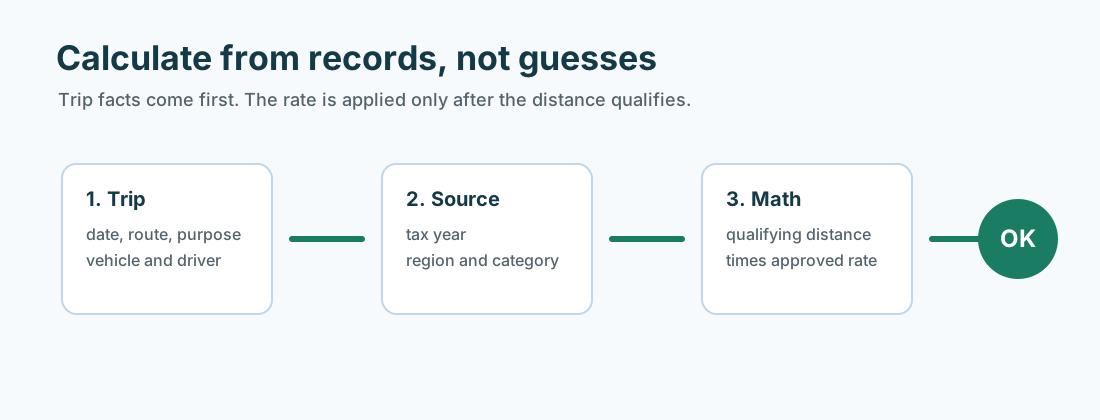
Use the cents per kilometre method when you have eligible work-related or business kilometres for a car and want a rate-based deduction instead of a logbook percentage of actual costs. For 2025-26, multiply eligible kilometres by 88 cents, stop at 5,000 kilometres per car, and keep enough trip records to show how you calculated the total.
How the deduction works
The method replaces individual running-cost claims with one kilometre rate. You calculate the claim from eligible work-related or business kilometres, not from fuel receipts or a year-end estimate.
The formula is:
eligible work-related kilometres x income-year rate = deduction
Example: if you drive 3,250 eligible work-related kilometres in the 2025-26 income year, the calculation is:
3,250 km x $0.88 = $2,860
That $2,860 is the car expense amount produced by the method before your broader tax-return review. The calculation does not make private trips deductible, and it does not let you add running costs again on top of the rate.
Current and recent ATO rates
Use the rate for the income year in which the driving happened. A trip on 30 June 2025 belongs to 2024-25, while a trip on 1 July 2025 belongs to 2025-26. Recent rates are listed in the ATO cents/km method guidance.
| Income year | ATO rate |
|---|---|
| 2025-26 | 88 cents/km |
| 2024-25 | 88 cents/km |
| 2023-24 | 85 cents/km |
| 2022-23 | 78 cents/km |
| 2020-21 and 2021-22 | 72 cents/km |
| 2018-19 and 2019-20 | 68 cents/km |
| 2017-18 | 66 cents/km |
For older income years, use the historical rate that applied at the time. The rules before 1 July 2015 used older car expense methods and engine-capacity rates, so use the Historical ATO Cents Per Kilometre Rates (Australia) guide when you are rebuilding an old claim.
Who can use this method
This method is available only when the vehicle, worker, and expense facts fit the ATO rules.
| Claim situation | Can use this method? | Watch point |
|---|---|---|
| Employee claiming work-related car expenses for their own car | Usually yes, if the car is owned, leased, or hired under hire-purchase and the expense was not reimbursed | The trips must be work-related, not ordinary private commuting |
| Sole trader claiming for a car | Yes | Keep business kilometre support and apply the 5,000 km cap per car |
| Partnership where at least one partner is an individual | Yes, for a car | Companies and trusts use different rules |
| Company or trust | No | Use actual costs for business motor vehicle expenses |
| Motorcycle, scooter, truck, minibus, or other non-car vehicle | No | Claim under the applicable actual-cost or work-related travel rules instead |
For Australian tax purposes, the normal car expense methods apply to a car designed to carry less than one tonne and fewer than nine passengers, including the driver. Vehicles outside that definition do not use this method or the logbook method for work-related car expenses.
What the rate covers
The rate is meant to cover the car running costs built into the method, including fuel, registration, insurance, servicing, repairs, maintenance, and depreciation or decline in value. Because those costs are already included, you do not add them as separate deductions for the same car under this method.
That makes the method easier to administer, but it also limits the claim. If your work-related use or actual car expenses are high, compare the logbook method before deciding which method to use.
The 5,000 kilometre cap
The cap is 5,000 eligible work-related or business kilometres per car, per income year. At 88 cents/km, the maximum rate-based claim for one car in 2025-26 is:
5,000 km x $0.88 = $4,400
If you use two eligible cars, keep the kilometres separate by vehicle. The cap does not let you combine one car’s unused kilometres with another car’s excess kilometres.
If one car has more than 5,000 eligible kilometres, the extra kilometres do not increase the claim. Consider the logbook method for that car if you have, or can create, the required records.
Records to keep
You do not need receipts for each car running cost when you use this method. You still need a defensible record of the work-related kilometres and the car facts behind the claim.
Keep a file that shows:
- trip dates
- work purpose, client, job, or destination
- kilometres travelled
- which car was used
- whether each trip was work-related, business, or private
- how the annual kilometre total was calculated
- evidence that you own, lease, or hire the car under hire-purchase where relevant
- employer payment details if an allowance or reimbursement is involved
Business motor vehicle expense records generally need to be kept for five years under the ATO motor vehicle expense records guidance. For employee tax returns, keep records that show how the claim was worked out, such as diary, calendar, or app records.
Employees, reimbursements, and allowances
Employees generally need three things before claiming work-related car expenses: eligible work trips, a qualifying car they own or lease, and an expense they paid themselves without being reimbursed.
Do not treat every employer kilometre payment as a tax deduction question. A reimbursement, a cents per kilometre allowance, and a flat car allowance can have different tax and withholding treatment. The ATO allowances and reimbursements guidance separates reimbursements from allowances, and a reimbursed expense generally should not be claimed again by the employee.
If your employer pays a kilometre-based amount, check your payslip, income statement, employer policy, award, or agreement before using this method in your tax return. The ATO rate may be used in workplace policies, but it is not a blanket answer for every payment.
Cents per kilometre or logbook method
This rate method is usually the simpler choice when your eligible kilometres are modest, you want a predictable calculation, and you do not have a 12-week representative logbook with actual car expense records.
The logbook method can be better when work-related use is high, actual running costs are significant, or one car has more than 5,000 eligible kilometres. Under the ATO logbook method, you use a business-use percentage from a representative logbook period and apply that percentage to eligible actual car expenses.
| Factor | Rate method | Logbook method |
|---|---|---|
| Calculation | Eligible kilometres multiplied by the ATO rate | Work-related percentage multiplied by actual car costs |
| Kilometre limit | 5,000 km per car, per income year | No 5,000 km cap, but records must support the percentage |
| Receipts for running costs | Not needed for the running costs covered by the rate | Needed for actual car expenses |
| Trip records | Needed to show how kilometres were worked out | Needed as part of a representative logbook and odometer file |
| Best fit | Simpler, lower-kilometre claims | Higher use, higher costs, or stronger records |
Mileage tracking records and MyCarTracks
A clean rate-based deduction file is built during the year, not reconstructed from memory at tax time.
- Confirm the car. Check that the vehicle is a car and that you own, lease, or hire it under hire-purchase where required.
- Capture every trip. Record the date, distance, car, and purpose.
- Classify the trip. Separate work-related or business kilometres from private driving and ordinary commuting.
- Check payment status. Remove expenses already reimbursed where the reimbursement treatment prevents a deduction.
- Apply the income-year rate. Use the rate for the year when the trip occurred.
- Apply the cap. Stop the calculation at 5,000 eligible kilometres per car.
- Keep the evidence. Store the trip report, calculation notes, ownership or lease support, and employer payment records.
MyCarTracks automatic mileage tracking can capture trips by date, vehicle, distance, and purpose so you can review work-related kilometres before tax time. For teams, MyCarTracks fleet tracking can help managers review driver reports before approving kilometre-based payments.
Common mistakes
- Using the current rate for an older income year.
- Claiming more than 5,000 kilometres for one car under this method.
- Adding fuel, registration, insurance, servicing, repairs, or depreciation on top of the rate.
- Claiming ordinary home-to-work commuting without a specific ATO-supported exception.
- Using the method for a motorcycle, truck, minibus, or vehicle that is not a car.
- Treating an employer allowance as if it automatically removes or creates a deduction.
- Keeping only a rough annual kilometre total with no trip-level support.
- Forgetting to separate cars when more than one vehicle is used.
FAQ
What can I claim without fuel and servicing receipts?
This method can cover as many as 5,000 eligible work-related or business kilometres for each car without separate receipts for the running costs built into the rate. You still need records that show how the kilometre total was worked out.
What is the cents per kilometre method?
It is an ATO car expense method that multiplies eligible work-related or business kilometres by a set income-year rate. The rate includes car running costs and depreciation, so the calculation is based on kilometres rather than individual running-cost receipts.
How many cents per kilometre can I claim for 2025-26?
For the 2025-26 income year, the ATO cents per kilometre rate is 88 cents per kilometre. The same 88 cent rate applies for 2024-25.
Do I need a logbook for the cents per kilometre method?
You do not need the full 12-week logbook required by the logbook method. You do need records, such as a diary, calendar, job schedule, or mileage tracking report, that show how you calculated the work-related kilometres.
Can sole traders use cents per kilometre?
Sole traders can use the cents per kilometre method for cars. Sole traders using a vehicle that is not a car, and companies or trusts using any motor vehicle, need the applicable actual-cost rules instead.
What if my car claim is above 5,000 kilometres?
This method is capped at 5,000 eligible kilometres per car. If your work-related use is higher, compare the logbook method and keep the records needed to support a business-use percentage of actual car expenses.
Where to go next
- Current ATO Cents Per Kilometre Rate (Australia) for current and recent rate checks
- Historical ATO Cents Per Kilometre Rates (Australia) for older income-year rates
- Car Expense Tax Deductions (Australia) for the wider method comparison
- ATO Mileage Guide for Australia for reimbursement, logbook, FBT, and car expense context
Sources
- ATO: Expenses for a car you own or lease
- ATO: Cents per kilometre method
- ATO: Motor vehicle expense calculation methods
- ATO: Motor vehicle expense records you need to keep
- ATO: Expenses for a vehicle that isn’t yours or isn’t a car
- ATO: Allowances and reimbursements
- ATO: Logbook method
- ATO: Calculating car expenses prior to 1 July 2015