The ATO cents per kilometre rate for the 2020-21 income year was 72 cents per kilometre for eligible work-related car expense claims. The ATO 2020 rate notice says the 72 cent rate applied from the income year commencing 1 July 2020.
That date matters. Trips from 1 July 2019 to 30 June 2020 sat in the 2019-20 income year and used the older 68 cent rate. Trips from 1 July 2020 to 30 June 2021 sat in the 2020-21 income year and used 72 cents per kilometre.
This article is educational and is not tax, legal, payroll, employment, or financial advice. Older car expense claims can depend on the trip date, vehicle, ownership, business structure, reimbursement history, and records available. Check the official source and a qualified professional before relying on an older calculation.
Quick answer
For 2020-21, the ATO cents per kilometre rate was 72 cents per kilometre. For 2019-20, the rate was 68 cents per kilometre. If your report crosses 30 June 2020, split the trips by income year before calculating a deduction or reviewing a kilometre-based employer payment.
2020-21 ATO cents per kilometre rates
| Income year | Trip dates | Rate |
|---|---|---|
| 2019-20 | 1 July 2019 to 30 June 2020 | 68 cents/km |
| 2020-21 | 1 July 2020 to 30 June 2021 | 72 cents/km |
The current ATO cents per kilometre method page lists 72 cents per kilometre for 2020-21 and 2021-22, and 68 cents per kilometre for 2018-19 and 2019-20. The individual ATO expenses for a car you own or lease guidance uses the same recent-rate sequence.
Why the 1 July 2020 date matters
Australian income years run from 1 July to 30 June for most individual tax purposes. A trip on 30 June 2020 was still in 2019-20, so the 68 cent rate applied. A trip on 1 July 2020 was in 2020-21, so the 72 cent rate applied.
This is the most common error in old files: a spreadsheet export covers both June and July, then one rate is applied to the whole report. Split the trips first, then multiply each income-year total by the correct rate.
How to calculate a 2020-21 cents per kilometre claim
Use this formula:
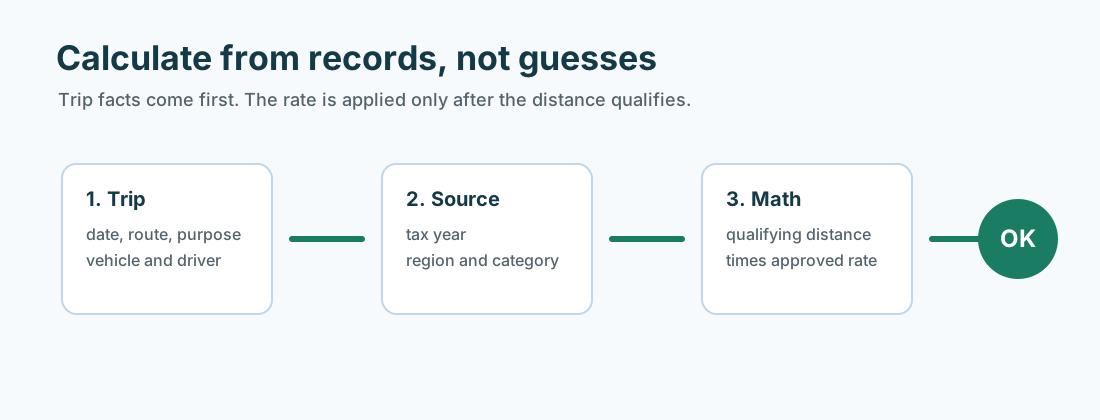
eligible work-related kilometres x 72 cents = deduction amount
Example: 2,750 eligible work-related kilometres in 2020-21 at 72 cents per kilometre equals $1,980.
The cents per kilometre method was capped at 5,000 business kilometres per car. If you had more than 5,000 eligible kilometres for the car, the cents per kilometre method still capped the claim at 5,000 kilometres.
What the 72 cent rate covered
The cents per kilometre rate was designed to include car running costs in one amount. That included:
- decline in value
- registration
- insurance
- maintenance
- repairs
- fuel
Do not add those costs again on top of the cents per kilometre calculation. If the flat rate did not suit the car’s actual costs, the logbook method was the comparison point.
Who could use the 2020-21 rate?
Employees could use the rate for eligible work-related car expense deductions where they used their own car, leased car, or hire-purchase car and were not reimbursed for the claimed expense.
Sole traders and eligible partnerships could use the cents per kilometre method for cars. Companies and trusts use actual costs. Motorcycles, trucks, minibuses, and vehicles outside the ATO car definition need different motor vehicle expense treatment.
Records to keep when rebuilding a 2020-21 file
The method did not require receipts for every running cost covered by the rate, but the kilometres still needed support. Keep a file that shows:
- trip date
- work purpose
- start and end locations or route
- kilometres travelled
- vehicle used
- calculation worksheet
- source used for the rate
- notes separating 2019-20, 2020-21, and 2021-22 trips
Calendar entries, job records, invoices, rosters, route notes, app exports, and diary notes can help explain how the kilometre total was worked out.
Employee reimbursement is different from a deduction
An employer could use a cents per kilometre rate for car expense payments, but the ATO deduction rate does not answer every reimbursement question by itself. Awards, agreements, workplace policy, payroll reporting, withholding, exact reimbursement treatment, and fringe benefits tax can all matter.
If you were paid a car allowance or a kilometre-based car expense payment, check the payment type before claiming a deduction for the same travel. The ATO withholding for allowances table gives special treatment for cents per kilometre car expense payments up to the approved rate and kilometre limit, and different treatment for excess amounts.
Where 2020-21 fits in the rate sequence
| Income year | ATO cents per kilometre rate |
|---|---|
| 2022-23 | 78 cents/km |
| 2021-22 | 72 cents/km |
| 2020-21 | 72 cents/km |
| 2019-20 | 68 cents/km |
| 2018-19 | 68 cents/km |
Use the full historical ATO cents per kilometre rates table if you are rebuilding records from more than one older income year.
How MyCarTracks helps with older rate checks
Old mileage claims are easier to support when trips are already organised by date, vehicle, driver, purpose, and distance. MyCarTracks automatic mileage tracking can keep future trips tied to the correct income year before tax or reimbursement review.
For employers and teams, MyCarTracks fleet tracking can help managers review kilometre records, driver activity, and vehicle use before an old reimbursement file becomes difficult to explain.
Common mistakes to avoid
- Using 72 cents for June 2020 trips.
- Using 68 cents for July 2020 trips.
- Applying one rate to a report that crosses 30 June 2020.
- Claiming more than 5,000 kilometres per car under the cents per kilometre method.
- Adding fuel, registration, insurance, maintenance, repairs, or decline in value on top of the rate.
- Treating a car allowance, exact reimbursement, and deduction as the same thing.
- Applying car rules to motorcycles, trucks, minibuses, companies, or trusts.
FAQ
What was the ATO cents per kilometre rate for 2020-21?
The rate was 72 cents per kilometre for eligible 2020-21 cents per kilometre claims.
What was the ATO cents per kilometre rate for 2019-20?
The 2019-20 rate was 68 cents per kilometre.
When did the rate change from 68 cents to 72 cents?
The 72 cent rate applied from the income year commencing 1 July 2020. For ordinary income-year trip records, that means 2020-21 trips used 72 cents per kilometre.
Was the 2021 ATO rate also 72 cents?
Yes. ATO sources list 72 cents per kilometre for 2020-21 and 2021-22.
How many kilometres could you claim in 2020-21?
The cents per kilometre method capped the claim at 5,000 business kilometres per car.
Could an employer use the 2020-21 ATO rate for reimbursement?
An employer could use a cents per kilometre rate for car expense payments, but payroll, withholding, award, agreement, policy, and FBT treatment needed separate checks.
Where to go next
- Historical ATO Cents Per Kilometre Rates (Australia) for the full older-rate table
- ATO Cents Per Kilometre Rate 2021-22 (Australia) for the next income-year page
- Current ATO Cents Per Kilometre Rate (Australia) for current-year claims
- Cents Per Kilometre Method (Australia) for method eligibility and records
- Mileage Reimbursement for Employees (Australia) when an employer payment is involved