Mileage reimbursement for employees in Australia depends on the payment type. The ATO allowances and reimbursements guidance separates allowances from reimbursements: an allowance is a separately identified payment, while a reimbursement pays back actual expenses already incurred.
That difference controls the next questions: whether tax is withheld, whether the amount appears on your income statement, whether you can claim a deduction, and whether fringe benefits tax is relevant to your employer. A car allowance, a cents per kilometre car expense payment, an exact reimbursement, and a company car are not the same thing.
This article is educational and is not tax, legal, payroll, employment, or financial advice. Australian payroll, tax-return, award, agreement, employer policy, and FBT rules can change. Check your income statement, employer policy, current ATO guidance, and a qualified professional before relying on a payment or deduction.
Quick answer
Employees should first identify the payment type. A car allowance is generally assessable income and may let you claim work-related car expenses if you paid them yourself and have records. A reimbursement for actual expenses can be treated differently, especially where FBT applies; if you were fully reimbursed and the amount is not assessable income, you generally cannot claim the same expense again. A cents per kilometre car expense payment may have special withholding treatment up to the approved rate and kilometre limit, but you still need records.
Allowance, reimbursement, and company car are different
Use these labels carefully:
| Payment or arrangement | What it usually means | Employee record focus |
|---|---|---|
| Car allowance | A separately identified amount paid to cover expected car or travel costs | Income statement, payslips, work-related car records, deduction method, and records showing you incurred the expense |
| Cents per kilometre car expense payment | A kilometre-based payment for business kilometres | Trip dates, purpose, kilometres, rate, vehicle used, income statement treatment, and employer policy |
| Exact reimbursement | Employer pays back specific expenses you already incurred | Receipts, claim form, payment record, and whether the reimbursement is covered by FBT or assessable income |
| Company car or employer-provided vehicle | Employer provides or makes a car available | Private-use records, expense payments you personally made, and employer FBT context |
Your employer can set its own reimbursement rate or policy unless an award, agreement, contract, or workplace policy says otherwise. The ATO tax treatment does not by itself create an employment entitlement to reimbursement.
Car allowance for employees
A car allowance gives flexibility because it is paid whether your actual car costs are higher or lower than the allowance. It can help with fuel, servicing, insurance, registration, lease costs, or other car expenses, but it is not the same as an exact reimbursement.
The ATO employment allowances guidance explains that allowances are generally declared as income when they appear on the income statement or payment summary. If you receive a taxable allowance and you personally incur work-related car expenses, you may still be able to claim a deduction, but only when the ordinary deduction conditions and record requirements are met.
Do not assume the allowance amount equals your deduction. Your deduction is based on eligible work-related car expenses and the method you can use, not simply the allowance your employer paid.
Cents per kilometre payments from an employer
Some employers reimburse or pay employees at a set rate for each business kilometre. The employer does not have to use the ATO cents per kilometre rate unless a policy, award, agreement, or contract requires it.
For ATO withholding, the withholding for allowances table gives special treatment to cents per kilometre car expense payments up to the approved rate and kilometre limit. Amounts above the approved rate or beyond the kilometre limit can have different withholding treatment.
For 2024-25 and 2025-26, the ATO cents per kilometre rate used for car expense deduction calculations is 88 cents per kilometre. If your employer uses a different rate, keep the policy or payslip context with your trip records.
Reimbursement for actual car expenses
An exact reimbursement pays you back for a specific expense you already incurred. That might be a fuel receipt, parking charge, toll, repair cost, or another cost the employer policy allows.
The tax treatment can differ from an allowance. The ATO source note on reimbursements and FBT is important: if a reimbursement is covered by FBT, it is generally not assessable income to the employee, and the employee cannot claim a deduction for the expense. If an amount was treated as assessable income or had withholding applied, the deduction question depends on the expense, the records, and the tax-return facts.
Keep the reimbursement claim, receipt, payment date, work purpose, and income statement treatment together. That helps you avoid claiming the same cost twice.
If you use your own car
If you use a car you own, lease, or hire under hire-purchase for work-related trips, you may need records for both employer reimbursement and a possible tax-return deduction.
For employee work-related car expense deductions, the common ATO methods are:
- cents per kilometre, for eligible work-related kilometres up to the annual cap
- logbook method, for the work-related percentage of eligible actual car expenses
The ATO expenses for a car you own or lease guidance requires a qualifying car, work-related trips, unreimbursed expenses, and records. If your employer fully reimbursed the expense and the reimbursement is not assessable income to you, do not claim that same expense again.
If you use a company car or someone else’s vehicle
The cents per kilometre method is built around the cost of owning and operating your own car. If you use a company car or another person’s vehicle, the deduction and reimbursement question changes.
You may still be reimbursed for actual costs you personally paid, such as fuel, charging, parking, tolls, or maintenance allowed by policy. You generally should not use your own-car cents per kilometre claim to cover ownership costs you did not incur.
If an employer-provided car is available for private use, FBT may be relevant to the employer. That is a separate employer-side tax issue from your own tax-return deduction.
What trip records should employees keep?
Your employer may set the format, but the useful record is usually the same:
- trip date
- start and end locations or route
- work purpose
- kilometres travelled
- vehicle used
- rate or expense amount
- receipts for actual expenses
- manager approval or claim status
- payment date and payslip or income statement treatment
If you also intend to claim a tax deduction, keep the ATO method records as well. A reimbursement report that satisfies payroll may not be enough for a logbook-method deduction.
How to calculate a cents per kilometre reimbursement
The basic calculation is:
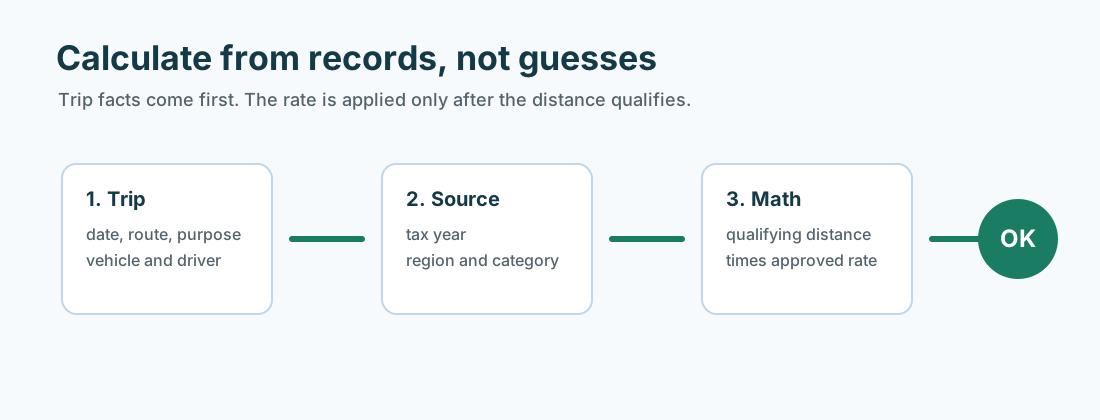
business kilometres x employer rate = reimbursement
Example:
| Reimbursement figure | Amount |
|---|---|
| Work-related kilometres | 240 km |
| Employer rate | $0.88/km |
| Reimbursement | $211.20 |
If the employer uses a lower rate, the reimbursement is lower:
| Reimbursement figure | Amount |
|---|---|
| Work-related kilometres | 240 km |
| Employer rate | $0.65/km |
| Reimbursement | $156.00 |
The payroll treatment is a separate question from the arithmetic. Keep the rate, kilometre count, and payment treatment together.
When can you claim a deduction as well?
Use this decision path:
- Did you personally incur the car expense?
- Was the trip work-related under ATO rules?
- Were you reimbursed for that exact expense?
- Was the payment assessable income or a non-assessable reimbursement?
- Do you have the records required for cents per kilometre or logbook?
If the employer reimbursed the exact expense and it is not assessable income to you, the deduction is usually blocked because you did not bear the final cost. If you received an allowance, or a payment treated as assessable income, you may still need to include the income and then separately claim any eligible deduction you can prove.
How MyCarTracks helps employee reimbursement
MyCarTracks automatic mileage tracking can capture work trips, help separate business and private kilometres, and export reports by date, vehicle, driver, purpose, and distance. That helps employees submit consistent reimbursement records and keep the evidence needed for tax-return review.
For employers and teams, MyCarTracks fleet tracking can help managers review driver records before payroll, finance, or accountant work begins.
Common mistakes to avoid
- Treating an allowance, reimbursement, and company car as the same payment.
- Assuming “no withholding” automatically means no tax-return reporting or no records.
- Claiming a deduction for an expense your employer fully reimbursed.
- Using the ATO cents per kilometre rate when the employer policy uses a different rate.
- Claiming ownership costs for a car you do not own, lease, or hire under hire-purchase.
- Keeping a payroll report but no trip purpose, route, or kilometre support.
- Mixing employee reimbursement records with sole trader business kilometres.
- Ignoring award, agreement, contract, or workplace policy rules when asking whether reimbursement is owed.
FAQ
Is a car allowance taxable in Australia?
A car allowance is generally assessable income when it appears on your income statement or payment summary. You may be able to claim work-related car expenses separately if you incurred them, they were work-related, and you have the required records.
Is mileage reimbursement taxable income?
It depends on the payment. Exact reimbursements, cents per kilometre car expense payments, and allowances can be treated differently. Check whether the payment was reported, whether tax was withheld, whether FBT applies, and whether it repaid a specific expense.
Can I claim car expenses if my employer reimbursed me?
Do not claim an expense that your employer fully reimbursed if the reimbursement is not assessable income to you. If the payment was an allowance or treated as assessable income, the deduction depends on your records and whether the expense was genuinely work-related.
What is the ATO cents per kilometre rate?
For 2024-25 and 2025-26, the ATO cents per kilometre rate for car expense deduction calculations is 88 cents per kilometre. Employers can use a different rate unless their policy, award, agreement, or contract says otherwise.
Do I need a logbook for reimbursement?
Your employer decides what records are required for reimbursement, subject to any workplace rule that applies. If you also claim a tax deduction using the logbook method, you need the ATO logbook records for that claim.
What if I use a company car?
If you use a company car, you may be reimbursed for actual costs you personally paid, but you generally should not use your own-car cents per kilometre claim for ownership costs you did not incur. Private use of an employer-provided car can raise FBT issues for the employer.
Where to go next
- Car Expense Tax Deductions in Australia for deduction method rules
- How to Claim Car Expenses From the ATO (Australia) for tax-return workflow
- Current ATO Cents Per Kilometre Rate (Australia) for current and recent rates
- ATO Car Logbook Requirements (Australia) for recordkeeping