If you use a car for work in Australia, start by separating three questions: whether the trip is work-related, whether you are being reimbursed or claiming a deduction, and which ATO record method fits the vehicle. Mileage tracking is the evidence layer that keeps those answers connected.
For the 2024-25 and 2025-26 income years, the ATO work-related car expenses guidance lists 88 cents per kilometre for the cents per kilometre method. That method is capped at 5,000 work-related kilometres per car, per year, and it only works after you can show how you worked out the kilometres.
If you want the recordkeeping side handled as you drive, MyCarTracks automatic mileage tracking can capture trips, classify business and personal kilometres, and keep exportable reports ready for tax, reimbursement, or logbook review.
This article is educational and is not tax, legal, payroll, employment, or financial advice. Australian car expense rules change by income year, vehicle, business structure, employer policy, award or agreement, and FBT treatment. Check the official source and a qualified professional before relying on a calculation.
Quick answer
Use the ATO cents per kilometre method when you want a simple car-expense deduction for up to 5,000 eligible work-related kilometres per car. Use the logbook method when you need to claim the business-use percentage of actual car expenses and can keep a representative 12-week logbook, odometer records, and receipts. Employers can reimburse work-related car use or pay allowances, but the tax and reporting treatment depends on whether the payment is an allowance, a reimbursement, or connected with fringe benefits tax.
Who this Australia guide is for
Use this guide if you are:
- an employee using your own car for work-related travel
- a sole trader or partner claiming business car expenses
- an employer building a car expense reimbursement policy
- a bookkeeper or manager reviewing logbook, reimbursement, or FBT records
If your vehicle is not a car, the ATO rules change. A car is generally a motor vehicle designed to carry less than one tonne and fewer than nine passengers, including the driver. Motorcycles, scooters, utility trucks with one tonne or more carrying capacity, and minibuses are handled under vehicle or travel expense rules rather than the normal work-related car expense methods.
Core ATO car expense choices
The main choice is not simply “rate or no rate.” The ATO method depends on who owns the vehicle, what type of vehicle it is, and whether the claim is made by an employee, sole trader, partnership, company, or trust.
| Situation | Common method | What it usually requires |
|---|---|---|
| Employee using a car they own or lease | Cents per kilometre or logbook method | Work-related kilometres, ownership or lease evidence, and method-specific records |
| Sole trader or eligible partnership claiming for a car | Cents per kilometre or logbook method | Business kilometres or business-use percentage, plus supporting records |
| Sole trader or partnership claiming for another vehicle type | Actual costs method | Actual expense records and business/private use records |
| Company or trust | Actual costs method | Receipts, tax invoices, vehicle records, and business-use support |
| Employer-provided car with private use | FBT car rules may apply | FBT calculation method, availability records, logbook records where needed, and odometer records |
For business structures, the ATO motor vehicle expense calculation methods page confirms that sole traders and some partnerships can use cents per kilometre or logbook for cars, while companies and trusts use actual costs.
Current ATO cents per kilometre rate
For 2024-25 and 2025-26, the cents per kilometre rate for eligible work-related car expense deductions is 88 cents per kilometre. Use the rate for the income year in which the driving happened, not the year you rebuild the report.
| Income year | ATO cents per kilometre rate |
|---|---|
| 2025-26 | 88 cents/km |
| 2024-25 | 88 cents/km |
| 2023-24 | 85 cents/km |
| 2022-23 | 78 cents/km |
| 2020-21 and 2021-22 | 72 cents/km |
| 2018-19 and 2019-20 | 68 cents/km |
| 2017-18 | 66 cents/km |
The ATO cents per kilometre method explains the business version of the method for sole traders and some partnerships. For employee deductions, use the work-related car expenses guidance for the correct income year.
What the cents per kilometre method covers
The cents per kilometre method is designed to cover car running costs in one rate. That includes costs such as fuel, registration, insurance, servicing, repairs, maintenance, and depreciation. You cannot use the 88 cent rate and then add the same car running costs again on top.
The calculation is straightforward:
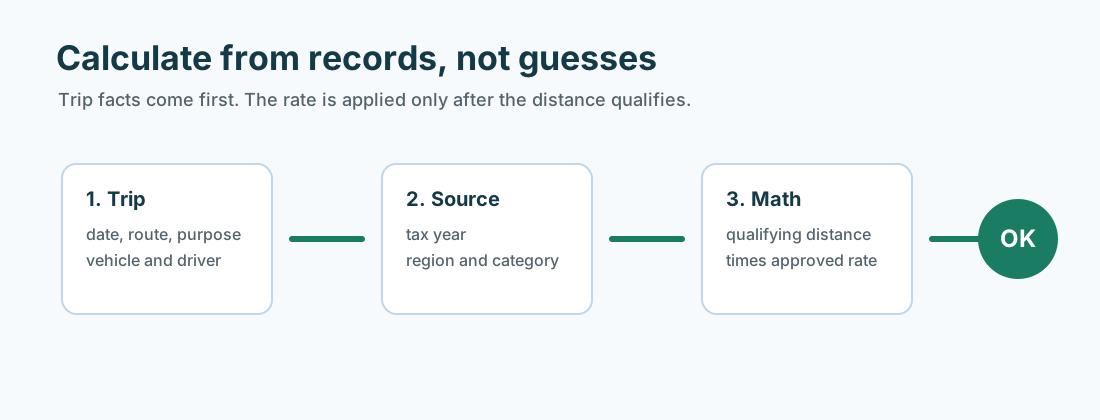
work-related kilometres x rate = deduction
Example: 3,000 eligible work-related kilometres in the 2025-26 income year at 88 cents per kilometre equals $2,640.
The method is useful when your work-related kilometres are under the 5,000 kilometre cap and you do not want to keep receipts for every car running cost. It is weaker when you drive a lot for work or when your actual business-use percentage and vehicle costs would support a larger claim under the logbook method.
Work-related travel that usually belongs in the record
Work-related car expenses generally start with trips made in the course of earning your income. Common examples include:
- travelling between separate workplaces
- driving to a client site, alternative worksite, meeting, or conference
- collecting supplies or delivering items for work
- travelling as part of itinerant work where your job regularly moves between locations
- travelling from your usual workplace to another work location
Normal travel between home and your regular workplace is usually private travel, even if the trip feels work-related. Limited exceptions can apply, such as specific bulky-equipment or home-base situations, but verify those situations against the ATO guidance before you include the kilometres.
Employee reimbursement, car allowance, and deductions
If you are an employee, your employer may pay you in several ways:
- a cents per kilometre car expense allowance based on business kilometres
- a flat car allowance
- reimbursement for actual expenses you have already incurred
- access to a company car or salary-packaged vehicle
Those labels matter. The ATO allowances and reimbursements guidance separates allowances from reimbursements: a reimbursement pays back actual expenses, while an allowance is a separate payment for expected or work-related costs.
For withholding, the ATO withholding for allowances table gives special treatment for cents per kilometre car expense payments up to the approved rate and kilometre limit, and different treatment for excess kilometres or rates above the approved rate. If you receive a car allowance, check your income statement and do not assume it is the same thing as an exact reimbursement.
If you were reimbursed for an expense and the payment is not assessable income to you, you generally should not claim that same expense again as a deduction. If the payment was an allowance or had withholding applied, the deduction question depends on the expense, your records, and your income tax return facts.
Sole traders, partnerships, companies, and trusts
Sole traders and eligible partnerships usually choose between two car methods when the vehicle is a car:
- Cents per kilometre method: simpler, capped at 5,000 business kilometres per car, and no separate receipts for car running costs.
- Logbook method: more records, but it lets you claim the business-use percentage of actual car expenses.
If the vehicle is not a car, sole traders and partnerships use actual costs. Companies and trusts also use actual costs regardless of the vehicle type. The ATO actual cost method requires actual receipts and records that separate business and private use.
Keep separate records if you have both employment and business activity. A single mixed log can make it difficult to prove which kilometres belonged to your job, your sole trader work, private travel, or another activity.
Logbook method and business-use percentage
The logbook method uses your business-use percentage instead of a flat kilometre rate. To work out the percentage, divide business kilometres by total kilometres, then multiply by 100.
Example: 4,500 business kilometres divided by 6,000 total kilometres equals 75% business use.
Under the ATO logbook method, you keep a logbook, work out the business-use percentage, add total car expenses for the income year, and multiply the expenses by that percentage.
A logbook generally needs a continuous 12-week period that is representative of your travel. If you use the same logbook for later income years, keep odometer records and start a new logbook if your work pattern changes enough that the old one no longer represents your car use.
ATO mileage tracking records to keep
Your records depend on the method, but a strong car expense file usually includes:
- trip date
- destination or route
- work purpose
- work-related kilometres
- private kilometres where needed to support a percentage
- vehicle details
- odometer readings when required
- receipts, invoices, loan or lease documents, and registration records where relevant
- notes showing how you calculated the claim or reimbursement
The ATO motor vehicle expense records page says business motor vehicle records generally need to be kept for five years. Employee tax-return instructions also require records such as receipts, logbook and odometer records, and work-trip details when they support the claim.
How MyCarTracks helps with ATO mileage tracking
MyCarTracks automatic mileage tracking captures trips, lets drivers classify business and personal use, and exports reports that are easier to review than reconstructed calendar notes. For teams, MyCarTracks fleet tracking can help keep driver reports, vehicle activity, and reimbursement review in one workflow.
FBT and company cars
If an employer provides a car and the employee can use it privately, fringe benefits tax may enter the analysis. FBT is an employer-side tax, and the calculation is separate from an employee’s ordinary work-related car expense deduction.
The ATO taxable value of a car fringe benefit guidance points employers to the statutory formula method or the operating cost method. The operating cost method needs adequate records, and the ATO employer guide describes logbook and odometer records for car fringe benefit calculations.
Some vehicles and arrangements may be exempt or treated differently. For example, the ATO electric cars exemption has specific conditions, and plug-in hybrid electric vehicle treatment changed from 1 April 2025 unless transitional requirements are met. Do not treat an EV, ute, van, company car, car allowance, or reimbursement as automatically exempt without checking the current rule.
Common mistakes to avoid
- Using 88 cents per kilometre for an income year where a different rate applied.
- Claiming ordinary commuting as work-related travel without a supported exception.
- Using the cents per kilometre method for a motorcycle, truck, or minibus.
- Claiming more than 5,000 kilometres per car under the cents per kilometre method.
- Adding fuel, registration, insurance, or depreciation on top of the cents per kilometre rate.
- Claiming a deduction for expenses your employer already reimbursed without checking the tax treatment.
- Keeping only a total kilometre number with no diary, calendar, app, job, or route support.
- Reusing an old logbook after your work pattern changed materially.
- Treating employer reimbursement rules, ATO deduction rules, Fair Work entitlements, and FBT rules as if they were the same thing.
FAQ
How many cents per kilometre can you claim in Australia?
For the 2024-25 and 2025-26 income years, the ATO work-related car expenses guidance lists 88 cents per kilometre for the cents per kilometre method. Use the rate for the income year in which the work-related driving happened.
How many kilometres can you claim without receipts?
The cents per kilometre method lets you claim up to 5,000 work-related kilometres per car, per year without keeping receipts for each running cost. You still need to be able to show how you worked out the kilometres and that the trips were work-related.
Do you need a logbook for the cents per kilometre method?
You do not need a full logbook in the same way the logbook method does, but you still need a credible record of how you calculated your work-related or business kilometres. A diary, calendar, app record, or trip report can help support the calculation.
When is the logbook method better?
The logbook method can be better when you drive more than 5,000 work-related kilometres, have high car expenses, or need to claim a business-use percentage of actual costs. It requires stronger records: a representative logbook period, odometer readings, and receipts or other evidence for car expenses.
Is a car allowance taxable in Australia?
A car allowance is generally a separately identified payment and needs to be checked against ATO allowance and withholding rules. It is not the same as reimbursement for exact expenses. Check your income statement, payslip, employer policy, and the ATO allowance guidance before deciding whether you can also claim a deduction.
Can an employer use a different kilometre rate?
An employer policy, award, or agreement may use a different rate or payment structure. For tax and payroll treatment, check whether the payment is an allowance, a reimbursement, an award transport payment, or part of a fringe benefit arrangement.
Where to go next
Use the hub first, then move to the article that matches the decision you are making:
- Current ATO Cents Per Kilometre Rate (Australia) for the current 88 cent rate and rate-year checks
- Historical ATO Cents Per Kilometre Rates (Australia) when the driving happened in an older income year
- Car Expense Tax Deductions (Australia) when you are choosing between cents per kilometre, logbook, and actual costs
- Logbook Method (Australia) when you need the business-use percentage of actual car expenses
- Mileage Reimbursement for Employees (Australia) when your employer pays a car allowance or kilometre-based payment
- Car Fringe Benefits Tax (Australia) when a company car, private use, or salary packaging arrangement is involved
Sources
- ATO: Expenses for a car you own or lease
- ATO: Cents per kilometre method
- ATO: Motor vehicle expense calculation methods
- ATO: Logbook method
- ATO: Motor vehicle expense records you need to keep
- ATO: Allowances and reimbursements
- ATO: Withholding for allowances
- ATO: Taxable value of a car fringe benefit
- ATO: Electric cars exemption
- Fair Work Ombudsman: Allowances