If you use your own car for work in Australia, your logbook has one job: it must show which kilometres were work-related or business use, which kilometres were private, and how the car expense claim or reimbursement record was worked out. For employee deductions, the ATO expenses for a car you own or lease guidance requires a qualifying car, work-related trips, unreimbursed costs, and the required records.
The strictest ATO car logbook requirements apply when you use the logbook method. You generally need a 12 continuous week logbook that is representative of your travel, odometer readings, journey details, expense evidence, and calculation notes. Cents per kilometre claims need fewer records, but you still need to show how you worked out your work-related kilometres.
This article is educational and is not tax, legal, payroll, employment, or financial advice. Australian car expense rules can change by income year, vehicle type, ownership arrangement, business structure, employer payment, and fringe benefits tax treatment. Check current ATO guidance and a qualified professional before relying on a claim.
Quick answer
For the logbook method, keep a car logbook for at least 12 continuous weeks and record the beginning and end of the period, the car’s odometer readings, total kilometres, business or work-related kilometres, business-use percentage, vehicle details, and each trip’s date, reason, odometer readings, and kilometres. Keep receipts or other records for car expenses, plus odometer records for later income years if you keep using the same logbook.
Which records do you need by method?
Australian car records depend on what you are trying to support. Do not use one generic “mileage log” checklist for every situation.
| Situation | Main records to keep | Important limit |
|---|---|---|
| Logbook method for a car | 12 continuous week logbook, odometer readings, trip details, business-use percentage, expense records, and calculation notes | No 5,000 kilometre cap, but the logbook must represent your travel and may need replacing if circumstances change |
| Cents per kilometre method | Work-related or business kilometres, ownership evidence where relevant, and a diary, calendar, app, or similar explanation of how kilometres were worked out | No separate running-cost receipts for the rate, and the method is capped at 5,000 kilometres per car |
| Actual costs for non-car vehicles, companies, or trusts | Receipts, tax invoices, registration papers, loan or lease documents, year-round business and private use records, and calculation records | The normal car methods do not apply to all vehicles or structures |
| Employer reimbursement or allowance records | Trip reports, kilometres, purpose, dates, payment records, policy or award context, and expense evidence where needed | Tax treatment depends on whether the payment is an allowance, reimbursement, or connected to FBT |
The ATO motor vehicle expense records guidance sets out broader business motor vehicle records, including business and private kilometres, receipts, loan or lease documents, registration papers, and calculation details.
What counts as a car logbook?
A car logbook is the record that proves how a car was used over a period. It can be paper or electronic. The format is less important than whether the record is complete, readable, retained, and tied to the car and income year.
For tax purposes, the logbook supports a percentage. That percentage is only useful when the logbook includes total kilometres, not just claimable trips. If the car is used privately as well as for work or business, private kilometres need to be captured in the total distance so the business-use percentage is not overstated.
What your ATO logbook must include
For a logbook-method claim, keep two layers of records: the overall logbook period and the journey-level entries inside it.
For the overall logbook period, record:
- when the logbook period began and finished
- the car’s make, model, engine capacity, and registration number
- the odometer reading at the start of the logbook period
- the odometer reading at the end of the logbook period
- total kilometres travelled during the period
- business or work-related kilometres travelled during the period
- the business-use or work-related use percentage
For each journey, record:
- why the journey was made
- the start date and end date
- the odometer reading at the start of the journey
- the odometer reading at the end of the journey
- kilometres travelled
The ATO logbook method page also notes that two or more journeys in a row on the same day can be recorded as one journey where appropriate. Keep enough detail that the business purpose remains clear later.
The 12 continuous week rule
If this is the first income year you use the logbook method for the car, the logbook must cover at least 12 continuous weeks. The period needs to represent your travel for the year. A logbook built from only your busiest project weeks or only a quiet holiday period may not support the annual percentage.
If you start using the car for business or work-related purposes less than 12 weeks before the end of the income year, ATO business guidance allows the 12-week period to continue into the next income year so it covers the required continuous period.
You can start a new logbook at any time. That can be useful when a new job, new worksite pattern, new client route, changed business activity, or changed home location makes the old pattern unreliable.
How long is an ATO logbook valid?
A completed logbook can generally be valid for up to five income years. That does not mean you can ignore the car after the first 12 weeks.
For later income years that rely on the logbook, keep:
- odometer readings for the start and end of the full period you claim
- the work-related or business-use percentage based on the logbook
- expense records for the income year
- notes explaining why the old logbook still represents your current use
Start a new 12-week logbook when the old one no longer reflects how the car is used. Common triggers include changing jobs, moving home, changing territories, adding a second job, shifting from employee work to sole trader work, or using the car for a new mix of private and business trips.
Do you need odometer readings?
For the logbook method, yes. Odometer readings are part of the required evidence for the logbook period, each journey, and later income years that rely on a previous logbook.
For cents per kilometre, the record standard is lighter, but you still need a way to show how work-related kilometres were worked out. A diary, calendar, roster, job list, route record, or app export can help support the number. If the claim is reviewed, a rounded annual total with no supporting notes is weak evidence.
For actual-cost business records and FBT-related car records, odometer records can also matter because the record needs to separate business and private use or support an operating-cost calculation.
Expense records to keep with the logbook
The logbook proves the percentage. The expense records prove the costs that percentage is applied to.
Keep records for:
- fuel and oil, using receipts where available or a reasonable estimate supported by odometer records where ATO guidance allows it
- registration
- insurance
- servicing, repairs, tyres, maintenance, and cleaning
- lease payments or eligible finance interest
- electricity expenses for an electric car where relevant
- purchase details and decline-in-value calculations if depreciation is included
Do not claim private-use costs. Do not treat the car purchase price, loan principal, or improvements as ordinary running costs. If depreciation, GST, luxury car rules, salary packaging, or small business concessions are involved, get advice before relying on a simple logbook percentage.
Cents per kilometre records
The cents per kilometre method does not require receipts for running costs because the rate already takes car running costs into account. It also does not require a full logbook.
It still requires support for the kilometres. Keep a record that explains:
- where you travelled
- when the travel happened
- why the trip was work-related or business use
- how many kilometres were included
- which car was used
The ATO may ask how you worked out the number. For a small claim, diary or calendar notes may be enough. For repeated work driving, app records or a simple trip log are easier to defend than reconstructing routes months later.
Actual-cost and employer records
The competitor source treats “actual costs” as a separate recordkeeping path, and that can be useful, but the Australian context needs qualification.
For sole traders and partnerships using a car, the main ATO car methods are cents per kilometre and logbook. Actual costs become more relevant for companies, trusts, and vehicles that are not cars, such as many motorcycles, trucks, vans, and vehicles with a carrying capacity of one tonne or more or nine or more passengers.
Employer reimbursement records are a separate workflow again. If you submit kilometres to an employer, keep the trip date, reason, distance, vehicle, payment record, and any expense evidence the policy requires. If a company car is available for private use, FBT may be relevant to the employer, and logbook and odometer records can support the operating cost method.
Car logbook formats the ATO can accept
A logbook can be electronic or paper if it records the required information and can be retained. Common formats include:
- paper logbook or diary
- spreadsheet
- PDF export
- CSV export
- ATO app records where appropriate
- mileage tracking or car logbook app export
Choose the format around the review process. A paper logbook can work for one car and stable driving. A spreadsheet can work when you are disciplined about odometer entries. An app can work better when trips happen often, drivers need to classify business and personal use, or a team needs exported reports.
If you are submitting a reimbursement claim to an employer, check the employer’s format before the first report. A tax-ready logbook and a payroll-ready reimbursement file may need the same trip data organised in different ways.
How MyCarTracks helps with car logbook records
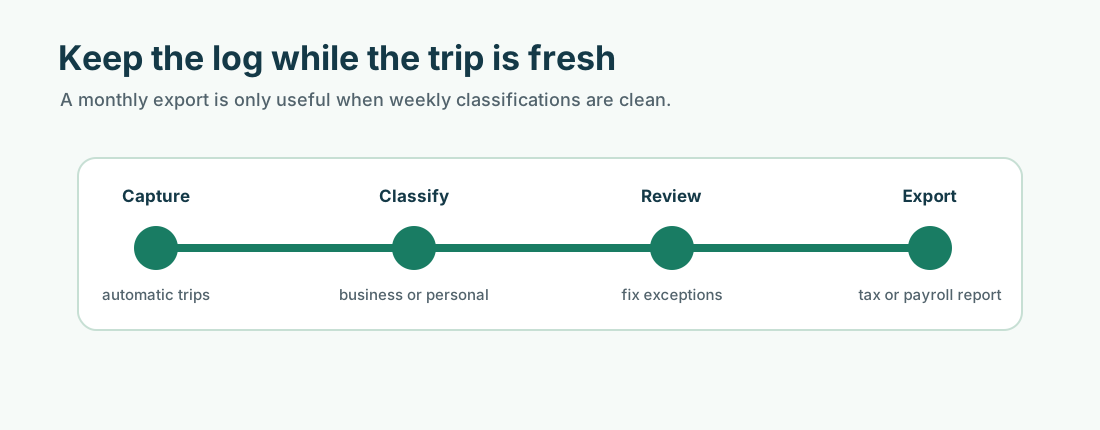
MyCarTracks automatic mileage tracking can capture trips as they happen, let drivers classify business and personal travel, and export reports by vehicle, driver, date, purpose, and distance. That helps with ATO logbook records because the record is built during the income year instead of reconstructed from calendars, fuel receipts, and memory.
For businesses with multiple drivers or vehicles, MyCarTracks fleet tracking can help managers review trip records before reimbursement, finance, payroll, FBT, or accountant review.
Record retention and audit file
Keep the logbook, odometer records, expense evidence, and calculation notes together by income year. The ATO records you need to keep guidance explains that records can be paper or electronic and generally need to prove the payment or expense.
A practical audit file includes:
- the completed 12-week logbook
- later-year odometer readings where the same logbook is reused
- receipts, invoices, registration papers, insurance records, service records, finance or lease records, and electricity records where relevant
- calculation notes showing the business-use percentage and deductible amount
- employer allowances, reimbursements, or payment records where they affect the claim
- evidence that the car was owned, leased, or hired under hire-purchase where that matters
For employee work-related car expense claims, retain the logbook and odometer records for five years after the end of the latest income year that relies on them. Business motor vehicle expense records are generally kept for five years.
Common mistakes to avoid
- Keeping only business trips and leaving private kilometres out of the total.
- Picking a 12-week period that does not represent the income year.
- Reusing a five-year logbook after the car’s use changed.
- Forgetting later-year odometer readings when relying on an old logbook.
- Claiming expenses that an employer reimbursed without checking the tax treatment.
- Using cents per kilometre and then adding fuel, insurance, servicing, or depreciation separately.
- Treating a motorcycle, truck, large van, company car, or trust-owned vehicle as if the normal individual car methods automatically apply.
- Saving receipts but no trip records to support the business-use percentage.
- Keeping records in a format that cannot be exported, reviewed, or retained when the ATO, employer, or accountant asks for them.
FAQ
What information must be in an ATO car logbook?
Record the logbook period, vehicle details, odometer readings, total kilometres, business or work-related kilometres, business-use percentage, and trip-level details such as reason, dates, odometer readings, and kilometres travelled.
Can I use an electronic logbook?
Yes. The ATO accepts electronic records when the required information is recorded and retained. A paper diary, spreadsheet, ATO app record, PDF or CSV export, or logbook app can work if the record is complete.
Do I need to record personal trips?
Yes, if the car has both private and work-related or business use and you are calculating a percentage. The business-use percentage depends on total kilometres, so private kilometres need to be included in the denominator.
How long do I need to keep my car logbook?
For employee logbook claims, keep the logbook and odometer records for five years after the end of the latest income year that relies on them. Business motor vehicle expense records are generally kept for five years.
Can I use the same logbook for more than one car?
No. Keep a separate logbook for each car. If you use the logbook method for two or more cars in the same income year, the logbook periods should cover the same 12 continuous weeks.
Do I need receipts for the cents per kilometre method?
You do not need receipts for running costs under the cents per kilometre method, but you do need to show how you worked out the work-related or business kilometres. Keep diary, calendar, route, roster, job, or app records.
Is a car logbook required for reimbursement?
Not always by tax law in the same way as a logbook-method deduction, but an employer may require trip records before paying a reimbursement or allowance. Keep the kilometres, dates, purpose, vehicle, payment records, and expense evidence required by the policy, award, agreement, or payroll process.
Where to go next
- Logbook Method (Australia) for the deduction calculation and business-use percentage workflow
- Car Expense Tax Deductions (Australia) when you are choosing between cents per kilometre, logbook, and actual costs
- Current ATO Cents Per Kilometre Rate (Australia) when a simpler rate-based claim may be enough
- ATO Mileage Guide for Australia for the broader Australian mileage, reimbursement, and FBT overview
Sources
- ATO: Expenses for a car you own or lease
- ATO: Logbook method
- ATO: Motor vehicle expense records you need to keep
- ATO: Motor vehicle expense calculation methods
- ATO: Actual costs method
- ATO: D1 Work-related car expenses 2025
- ATO: Records you need to keep
- ATO: Fringe benefits tax - a guide for employers, logbook records and odometer records