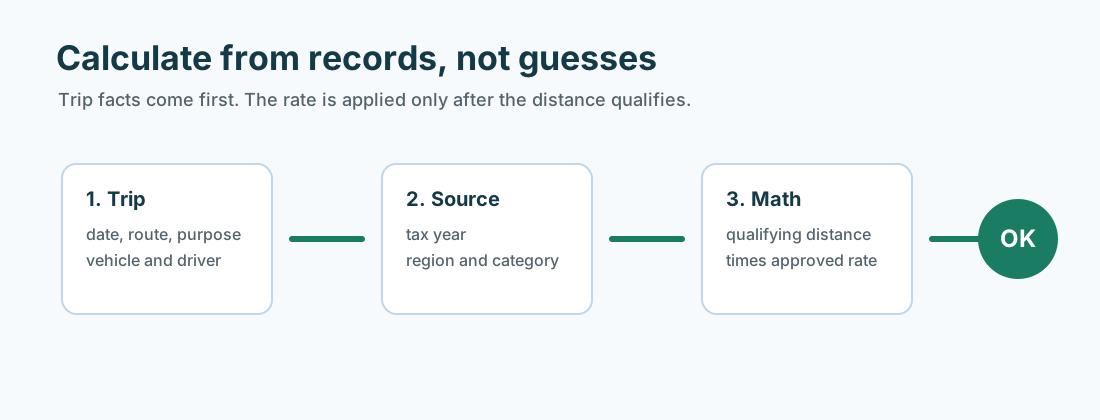
To calculate car expense reimbursement in Australia, first decide what you are calculating: an employer payment, an employee tax deduction, or a business motor vehicle deduction. The ATO allowances and reimbursements guidance separates allowances from reimbursements, and the tax result depends on that payment type.
For a simple employer cents per kilometre payment, multiply approved work-related kilometres by the employer rate. For an ATO cents per kilometre deduction, use the ATO rate for the income year and stay within the method’s cap. For logbook or actual-cost calculations, work out the business-use percentage first, then apply it to eligible expenses.
This article is educational and is not tax, legal, payroll, employment, or financial advice. Australian car expense rates, reimbursement policies, deduction methods, FBT, and recordkeeping rules can change. Check current ATO guidance, your employer policy, and a qualified professional before relying on a calculation.
Quick answer
Use kilometres x rate for a cents per kilometre reimbursement. Use business kilometres / total kilometres x 100 to calculate a business-use percentage for logbook or actual-cost calculations, then multiply eligible expenses by that percentage. Keep the reimbursement calculation separate from the tax deduction question, because the same arithmetic can have different payroll, income statement, FBT, and tax-return consequences.
Choose the calculation type first
Start here before using a formula:
| Calculation type | Formula | What it answers |
|---|---|---|
| Employer cents per kilometre reimbursement | Work-related kilometres x employer rate | How much payroll or accounts pays the employee |
| Employee ATO cents per kilometre deduction | Eligible work-related kilometres x ATO rate | Potential tax-return deduction for an unreimbursed own-car expense |
| Logbook method deduction or reimbursement model | Eligible expenses x business-use percentage | Business or work-related portion of actual car expenses |
| Actual-cost vehicle calculation | Actual expenses x business-use percentage | Company/trust/non-car or other actual-cost context |
The formulas can look similar, but the labels matter. A reimbursement can affect whether an employee can claim a deduction. An allowance can be assessable income. A company car can raise FBT issues for the employer.
Cents per kilometre reimbursement formula
For a basic employer payment:
work-related kilometres x employer rate = reimbursement
Example:
| Reimbursement figure | Amount |
|---|---|
| Approved work-related kilometres | 180 km |
| Employer rate | $0.88/km |
| Employee payment | $158.40 |
Employers can use the ATO rate as a benchmark, but they may use a different rate unless an award, agreement, contract, or policy requires otherwise.
If the employer uses a different rate
The calculation is the same when the employer uses a lower or higher rate:
work-related kilometres x employer rate = reimbursement
Example:
| Reimbursement figure | Amount |
|---|---|
| Approved work-related kilometres | 180 km |
| Employer rate | $0.60/km |
| Employee payment | $108.00 |
That lower payment does not automatically answer the employee’s tax deduction question. If the employee personally incurred unreimbursed work-related car expenses, they may need to compare the reimbursement, income statement treatment, and ATO deduction records.
For withholding, the ATO withholding for allowances table treats cents per kilometre car expense payments differently depending on whether they stay within the approved rate and kilometre limit.
ATO cents per kilometre deduction formula
For an eligible tax-return deduction under the cents per kilometre method:
eligible work-related kilometres x ATO rate = deduction
For 2024-25 and 2025-26, the ATO rate is 88 cents per kilometre. The ATO cents per kilometre method is capped at 5,000 business kilometres per car, per income year for the business version of the method, and employee car expense guidance uses the same rate and cap pattern for eligible work-related car expense claims.
Example:
| Deduction figure | Amount |
|---|---|
| Eligible work-related kilometres | 3,200 km |
| ATO rate | $0.88/km |
| Potential deduction | $2,816 |
The cents per kilometre rate already includes running costs and decline in value. Do not add fuel, insurance, registration, servicing, or depreciation again for the same car use under this method.
Logbook method calculation
The logbook method starts with the business-use percentage:
business kilometres / total kilometres x 100 = business-use percentage
Then apply that percentage:
eligible car expenses x business-use percentage = claim or reimbursement model
Example:
| Logbook figure | Amount |
|---|---|
| Business kilometres in representative period | 4,800 km |
| Total kilometres in representative period | 8,000 km |
| Business-use percentage | 60% |
| Eligible annual car expenses | $9,400 |
| Business-use amount | $5,640 |
The ATO logbook method requires a representative logbook period, odometer records, journey details, and expense records. A reimbursement policy can use a logbook-style percentage, but the tax-return deduction rules still need to be checked separately.
Actual-cost calculation
Actual-cost calculations use the same broad percentage logic:
actual motor vehicle expenses x business-use percentage = business-use amount
This is most relevant for companies and trusts, or for vehicles that are not cars, such as motorcycles, trucks, some vans, and vehicles outside the ATO car definition. The ATO actual costs method needs receipts and records that separate business and private use.
If an employer is reimbursing actual costs paid by an employee, keep the receipt and work purpose. If the employer is calculating business motor vehicle expenses, keep business/private use records and calculation support.
How to calculate business-use percentage
Use total kilometres as the denominator, not just the trips you want to count.
Example:
| Business-use figure | Amount |
|---|---|
| Business kilometres | 420 km |
| Private kilometres | 780 km |
| Total kilometres | 1,200 km |
| Business-use percentage | 35% |
Formula:
420 / 1,200 x 100 = 35%
This percentage can support logbook and actual-cost calculations when the records are representative and the method is available.
Multiple cars or vehicles
Calculate each car or vehicle separately. Different cars can have different rates, business-use percentages, ownership facts, logbook periods, and reimbursement policies.
For the logbook method, keep a separate logbook for each car. For cents per kilometre, apply the cap per car where the method is available. For actual costs, keep the receipts, use records, and calculation notes by vehicle.
Records behind the calculation
Keep:
- trip dates
- work purpose
- kilometres travelled
- vehicle used
- employer rate or ATO rate
- receipts where actual expenses are reimbursed or claimed
- odometer readings and logbook records where needed
- income statement, payslip, reimbursement, or allowance records
- notes showing whether the calculation is for reimbursement, deduction, or business records
The ATO motor vehicle expense records guidance explains that business records generally need kilometres for business and private use, receipts, loan or lease documents, registration papers, and calculation details.
How MyCarTracks helps with reimbursement calculations
MyCarTracks automatic mileage tracking can capture trips, separate business and private kilometres, and export reports by vehicle, driver, date, purpose, and distance. That gives you the kilometre totals needed for cents per kilometre calculations and the business/private split needed for logbook or actual-cost calculations.
For teams, MyCarTracks fleet tracking can help managers review driver records before reimbursement, payroll, finance, FBT, or accountant review.
Common mistakes to avoid
- Using a reimbursement formula as if it automatically proves a tax deduction.
- Applying the ATO rate to a company car or someone else’s vehicle without checking ownership and cost facts.
- Using the current rate for an older income year.
- Claiming more than the cents per kilometre cap under that method.
- Adding fuel, insurance, registration, servicing, or depreciation on top of the cents per kilometre rate.
- Calculating business-use percentage from business trips only and leaving private kilometres out.
- Combining two cars in one calculation.
- Missing income statement, allowance, reimbursement, or FBT treatment.
FAQ
How do I calculate car expense reimbursement?
Multiply approved work-related kilometres by the employer’s rate. For example, 180 kilometres at 88 cents per kilometre equals $158.40.
What is the current ATO cents per kilometre rate?
For 2024-25 and 2025-26, the ATO cents per kilometre rate for car expense deduction calculations is 88 cents per kilometre. Use the rate for the income year when the driving happened.
Can I use the ATO rate for employee reimbursement?
You can use it as a benchmark, but employers may set a different rate unless an award, agreement, contract, or policy says otherwise. Check withholding and reporting treatment when you set or receive the payment.
How do I calculate a logbook reimbursement?
Calculate the business-use percentage from the logbook, then multiply eligible expenses by that percentage. Keep the logbook, odometer readings, receipts, and calculation notes.
Do I calculate each car separately?
Yes. Keep separate records by car or vehicle. Caps, logbooks, business-use percentages, and actual costs can differ for each vehicle.
Can I claim a deduction if I was reimbursed?
Not automatically. If you were fully reimbursed for an expense and the reimbursement is not assessable income to you, you generally cannot claim the same expense again. If the payment was an allowance or assessable income, check the deduction rules and records.
Where to go next
- Mileage Reimbursement for Employees (Australia) for payment and tax treatment
- Mileage Reimbursement Rules for Employers (Australia) for policy and payroll records
- Current ATO Cents Per Kilometre Rate (Australia) for current and historical rate context
- Logbook Method (Australia) for business-use percentage records