Use this grey fleet policy guide to set the rules for private vehicles used for work, the evidence your organisation needs before approval, how work kilometres are recorded, and who reviews reimbursement claims. It should be practical enough for managers, finance, HR, WHS, and drivers to follow without turning every work trip into a one-off decision.
There is no single Australian law that says every employer must have a document called a grey fleet policy. The reason to create one is that work-related driving still needs risk controls. Safe Work Australia explains that a PCBU must manage WHS risks so far as is reasonably practicable, and vehicle guidance includes a worker using their own vehicle for work. A policy is the operating document that turns that duty into checks, records, approvals, and review dates.
This guide is for Australian employers, fleet administrators, finance teams, HR teams, operations managers, WHS leads, and business owners. It is educational only and is not WHS, legal, tax, payroll, employment, insurance, or financial advice.
Quick answer
An Australian grey fleet policy should say who can drive a private vehicle for work, which vehicles are acceptable, what licence, registration, roadworthiness, and business-use insurance evidence is required, how journeys are approved, what mileage records employees must keep, how reimbursement or allowances are handled, how incidents are reported, who owns the process, and when checks are repeated.
It should also make the limits clear: a written policy does not by itself prove WHS compliance, tax treatment, insurance cover, or employee entitlement. The business still needs to run the checks, keep evidence, review exceptions, and verify ATO, Fair Work, state or territory, insurer, and adviser requirements where they apply.
Does Australia require a grey fleet policy?
Usually the requirement is not the title of the document. It is the underlying duty to manage work-related driving risks, employment arrangements, reimbursement records, tax treatment, and insurance conditions.
A policy helps because it gives the organisation a repeatable process for:
- approving drivers and vehicles before work use starts
- checking licence, registration, vehicle suitability, and business-use insurance evidence
- setting safe driving, fatigue, mobile phone, journey planning, and incident-reporting expectations
- defining what counts as business travel and what counts as private travel or ordinary commuting
- collecting trip-level mileage records before reimbursement
- separating cents per kilometre payments, exact reimbursements, car allowances, company cars, and novated lease arrangements
- assigning ownership to HR, finance, operations, WHS, fleet, or another named role
- reviewing the policy when roles, routes, vehicle types, or work patterns change
Use the policy as evidence of a live process, not as a substitute for that process.
Legal and compliance view
For grey fleet, the legal and compliance picture usually crosses several teams. WHS focuses on whether work-related driving risks are identified, controlled, and reviewed. Finance and payroll focus on how payments are classified and recorded. HR and managers focus on employee eligibility, acknowledgements, and consistent enforcement. Insurance review focuses on whether the driver’s policy actually allows the business use the employer approves.
The model Work Health and Safety Act is a national model and must be implemented in a jurisdiction to have effect there. Do not assume every state and territory rule, roadworthiness check, incident notification rule, or insurance condition is identical. For higher-risk roles, regional driving, client transport, or any uncertainty, get advice from the relevant regulator or professional adviser.
Your policy should also name the records the business will rely on if something is questioned later:
- current driver and vehicle approval records
- driver declarations and policy acknowledgements
- licence, registration, insurance, and roadworthiness check outcomes
- work journey records, mileage reports, and approval history
- reimbursement, allowance, payroll, and FBT support where relevant
- incident, near-miss, defect, licence-change, and insurance-change reports
Why the policy matters
Grey fleet risk is easy to miss because the organisation does not own the vehicle. That does not make the work trip invisible. If a manager approves a client visit, site run, community care visit, delivery, inspection, training trip, or regional journey in a private vehicle, the business needs a clear way to show how that trip was approved and controlled.
The common failure points are predictable:
- nobody has a complete list of who drives for work
- licence or registration checks happen once and are not refreshed
- employees assume private comprehensive insurance covers work trips
- managers approve mileage totals without trip purpose or route support
- car allowance, cents per kilometre payment, and exact reimbursement language gets mixed together
- incidents, defects, and near misses stay in email threads instead of a review process
- the policy exists but no one owns the renewal cycle
A good policy reduces those gaps before they become a WHS, payroll, insurance, reimbursement, or records problem.
Grey fleet policy scope and purpose
Define when the policy applies. Keep the wording broad enough to catch occasional drivers as well as regular field roles.
Include:
- employee-owned cars used for work
- employee-leased vehicles
- novated lease or salary-packaged vehicles used for work
- private utes, vans, motorcycles, scooters, or other vehicles used for work tasks
- hire or rental vehicles if your organisation treats them in the grey fleet process
- contractor, volunteer, labour-hire, or third-party vehicles where someone carries out work for your organisation
- work trips between sites, client visits, errands, inspections, deliveries, training, regional travel, and community or home visits
State what is outside the policy too. Ordinary commuting between home and a regular workplace is usually private travel for ATO car-expense purposes, even if the employer chooses to pay or manage it differently under a workplace arrangement.
Driver eligibility
Set the minimum driver requirements before a private vehicle can be approved for work use.
At minimum, require:
- a current driver licence for the vehicle class
- a driver commitment to report licence suspension, cancellation, restrictions, medical limits, or relevant offences
- a declaration that the driver can safely complete the planned work trip
- agreement to follow road rules, fatigue rules, mobile phone rules, and company journey requirements
- manager approval before the first work trip in the vehicle
For higher-risk roles, add a schedule for repeat checks and a rule for what happens if the driver does not provide updated evidence.
Vehicle suitability and safety
Define the vehicle standard in plain language. “Registered” is not always enough. The vehicle should be suitable for the work, the route, the cargo, the passengers, and the expected kilometres.
Your policy can require:
- current registration
- roadworthy condition and maintenance appropriate for the vehicle and state or territory requirements
- tyres, brakes, lights, seatbelts, mirrors, and safety equipment in working order
- no known defect that makes the vehicle unsafe for work use
- enough capacity for equipment, passengers, or materials without overloading
- no unauthorised modifications or vehicle types that create unacceptable work risk
- extra approval for regional, remote, unsealed-road, night, long-distance, or client-transport work
Avoid promising that the business has “certified” the vehicle unless you actually run that inspection. It is usually better to record what evidence was checked and what the employee declared.
Maintenance and roadworthiness
Make maintenance an ongoing obligation, not a one-time onboarding checkbox.
The policy should say:
- the employee remains responsible for keeping their private vehicle serviced and safe
- the business can request servicing, inspection, or roadworthiness evidence where the role requires it
- drivers must report defects before using the vehicle for work
- managers can suspend work use until defects, registration, insurance, or licence issues are resolved
- records are refreshed on a schedule and when the vehicle changes
For state or territory roadworthy certificates, inspection labels, or other local requirements, avoid generic national claims. Link the employee to the relevant state or territory process or keep the policy wording general and verify the rule before publication.
Registration and business-use insurance
Check registration and insurance before any work-use approval. Do not rely on a broad statement such as “the employee has comprehensive insurance.”
The policy should require:
- current vehicle registration evidence
- current compulsory third party (CTP) insurance where it is tied to the registration system
- motor insurance wording, certificate, renewal notice, or insurer confirmation showing business use is covered for the approved work
- immediate notice if insurance is cancelled, changed, refused, restricted, or subject to a claim that affects work use
- no reimbursement for work kilometres until required insurance and registration evidence is current
Insurance wording varies by insurer and policy. Some private policies allow limited business use, some need a business-use endorsement, and some exclude particular work. The policy should tell drivers to confirm the exact use with their insurer and provide written evidence rather than assuming private-use cover is enough.
Journey approval and management
Not every work task needs a private car trip. The policy should give managers and drivers a simple decision path before travel happens.
Ask:
- Is the trip necessary, or would a phone call, video meeting, courier, or public transport be safer and more reasonable?
- Is the driver approved for the vehicle and route?
- Is there enough time to avoid fatigue or rushing?
- Does the trip involve long distance, remote roads, poor weather, night driving, transporting people, or carrying equipment?
- Does the manager need to approve the trip before it starts?
- What should the driver do if conditions change during the trip?
The Safe Work Australia risk process uses identify, assess, control, and review steps. That is a useful structure for grey fleet journeys: identify the trip risk, choose practical controls, and review incidents or patterns.
Incident, defect, and change reporting
Drivers need to know what to report, when to report it, and who receives the report.
Include reporting rules for:
- crashes and insurance claims
- near misses
- vehicle defects
- licence changes, suspensions, restrictions, or medical limits
- registration or insurance changes
- traffic infringements connected with work travel
- fatigue, route, weather, client, passenger, or equipment issues that affect safe driving
- vehicle replacement or regular-use vehicle changes
For serious incidents, the policy should direct staff to internal emergency procedures and the relevant regulator or adviser process. Do not try to summarise every notifiable-incident rule inside a general policy unless it has been checked for the jurisdiction.
Mileage, reimbursement, and ATO records
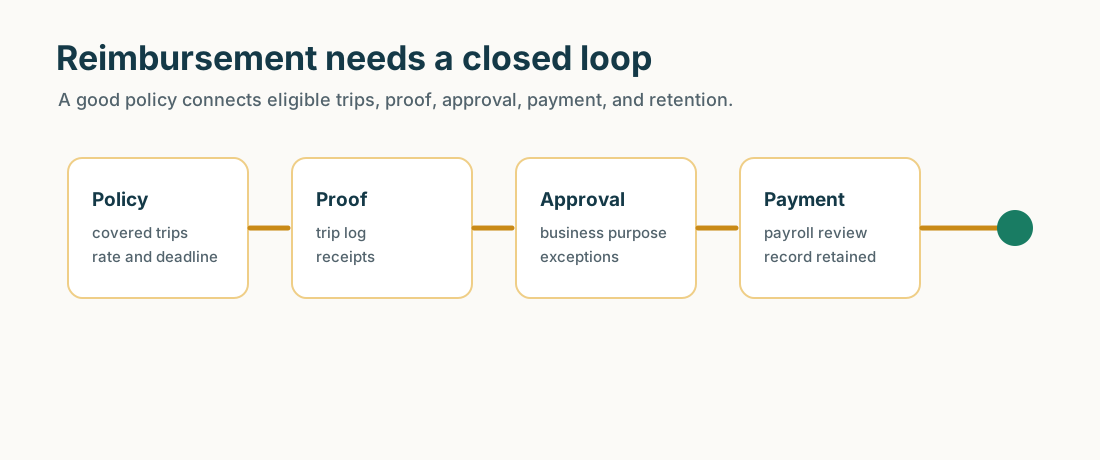
The policy should keep payment types separate. A car allowance, cents per kilometre car expense payment, exact reimbursement, company car, novated lease, and employee tax deduction are different workflows.
The ATO allowances and reimbursements guidance distinguishes allowances from reimbursements. It also explains that a reimbursement pays back an actual expense already incurred. For employee deductions, the ATO work-related car expenses guidance gives 88 cents for each kilometre for the 2024-25 and 2025-26 cents per kilometre method and explains the 5,000 kilometre cap in that deduction context.
Do not write the policy as if the ATO cents per kilometre rate is a mandatory employer reimbursement rate. Employer payment obligations may come from an award, enterprise agreement, contract, workplace policy, or other arrangement. The Fair Work Ombudsman allowances guidance is the better starting point for entitlement questions.
For each work journey, require a mileage record with:
- driver
- vehicle
- date
- start and end location or route
- business purpose
- kilometres travelled
- business/private classification
- manager approval
- reimbursement rate or expense category
- receipts where exact expenses are reimbursed
If company cars, employer-leased vehicles, novated leases, private-use reimbursements, or FBT records are involved, add the relevant ATO and adviser requirements. The ATO FBT recordkeeping guidance covers records such as calculations, employee declarations, invoices, receipts, logbooks, and odometer records.
Ownership and review
Name one accountable owner for the grey fleet policy. The work can be shared, but the policy needs a person or role that keeps the process current.
Common split:
| Area | Typical owner |
|---|---|
| Policy wording and employee acknowledgement | HR, people team, or operations |
| WHS risk controls and incident review | WHS, risk, safety, or operations |
| Mileage claims and reimbursement exports | Finance, payroll, or accounts |
| Driver and vehicle evidence | Fleet administrator, operations, HR, or managers |
| System setup and reporting | Operations, finance, or fleet administrator |
| Annual review and exceptions | Named policy owner with finance, HR, WHS, and management input |
Review the policy at least annually and whenever there is a material change: new roles, more drivers, regional routes, client transport, different reimbursement method, insurer feedback, incidents, or a payroll/ATO/FBT process change.
Grey fleet policy template outline
Copy this outline into your internal document and adapt it to your organisation.
| Policy section | What it should say |
|---|---|
| Purpose | Why the organisation allows private vehicles for work and what risks the policy controls |
| Scope | Which workers, vehicles, trip types, locations, and work arrangements are covered |
| Driver eligibility | Licence, fitness to drive, notification duties, and approval before work use |
| Vehicle standards | Registration, suitability, maintenance, roadworthiness, equipment, and restrictions |
| Insurance | Business-use confirmation, renewal evidence, policy changes, and claim notification |
| Journey approval | When trips need approval, how alternatives are considered, and how higher-risk trips are handled |
| Mileage records | Required trip fields, submission deadline, business/private classification, and audit support |
| Reimbursement | Rate, allowance, exact expense, approval, receipt, payroll, and FBT review rules |
| Incident reporting | Crashes, near misses, defects, infringements, licence changes, and insurance issues |
| Privacy and monitoring | What trip, vehicle, location, and document data is collected and who can access it |
| Non-compliance | What happens when evidence is missing, records are late, or a vehicle is not approved |
| Ownership | Named policy owner and responsibilities across HR, finance, WHS, operations, and managers |
| Review | Annual review date, renewal checks, change triggers, and exception review process |
Grey fleet policy checklist
Before rollout, check that the policy answers these questions.
| Area | Ready? |
|---|---|
| The policy defines grey fleet and private vehicle work use | Yes / No |
| Driver licence checks and renewal timing are stated | Yes / No |
| Vehicle registration and roadworthiness evidence are stated | Yes / No |
| Business-use insurance evidence is required before work kilometres are reimbursed | Yes / No |
| Journey approval and higher-risk trip rules are clear | Yes / No |
| Incident, near-miss, defect, licence-change, and insurance-change reporting is clear | Yes / No |
| Mileage records list date, route, purpose, vehicle, driver, kilometres, and approval | Yes / No |
| Reimbursement, allowance, exact expense, and company-car language is separated | Yes / No |
| ATO, Fair Work, FBT, and adviser checks are assigned where relevant | Yes / No |
| Privacy and access to tracking or document data are explained | Yes / No |
| One policy owner is named | Yes / No |
| Review dates and renewal triggers are scheduled | Yes / No |
How MyCarTracks helps policy records
A policy fails when it depends on memory. Build the checks into normal workflows.
Use onboarding to collect the first driver declaration, licence, registration, insurance, vehicle, and policy acknowledgement records. Use manager approval before the first work trip. Set renewal reminders for expiring licence, registration, and insurance evidence. Make the reimbursement process reject missing trip purpose, distance, vehicle, or approval fields.
For mileage records, MyCarTracks automatic mileage tracking can capture trips, let drivers classify business and private travel, and export reports by date, vehicle, purpose, and distance. For teams, MyCarTracks fleet tracking can help administrators review vehicle activity, team reports, and reimbursement records in one workflow.
MyCarTracks does not replace WHS, insurance, payroll, tax, or legal advice. It helps with the trip evidence and reporting layer that policy, reimbursement, and review processes rely on.
Common mistakes
- Approving private vehicles for work without business-use insurance evidence.
- Treating a signed driver declaration as a permanent substitute for renewed licence, registration, insurance, and vehicle checks.
- Saying “ATO rate” without explaining whether the policy uses a cents per kilometre payment, exact reimbursement, car allowance, or another method.
- Allowing employees to submit rounded monthly totals with no trip purpose, route, vehicle, or approval history.
- Ignoring occasional drivers because they do not look like fleet drivers.
- Keeping incidents, defects, or insurance changes outside the mileage and approval workflow.
- Leaving ownership split between HR, finance, operations, WHS, and managers without one accountable policy owner.
- Assuming every state, territory, insurer, award, agreement, and vehicle type works the same way.
FAQ
What does a grey fleet policy do?
It gives employees and managers one rulebook for private vehicles used on work trips. The policy should cover driver eligibility, accepted vehicles, required evidence, trip approval, mileage records, reimbursement handling, and change reporting.
Does every Australian employer need one?
There is no single national requirement for a document with that exact title. The practical need comes from WHS risk management, employment arrangements, reimbursement controls, insurance terms, and recordkeeping. A written policy helps show the business has a process, but the checks and records still need to happen.
What should employers check before approving a private vehicle?
Check the driver’s licence, vehicle registration, vehicle suitability, maintenance or roadworthiness evidence where needed, and written confirmation that motor insurance covers the approved business use. Also check that the trip type is work-related and allowed under the policy.
Does personal car insurance cover work driving?
Not automatically. Insurance terms vary. The driver should confirm the exact business use with their insurer and provide written evidence. A private comprehensive policy label is not enough on its own.
What ATO rate should a grey fleet policy use?
For 2024-25 and 2025-26, the ATO employee car-expense deduction rate is $0.88 for each kilometre under the cents per kilometre method. Employers can use it as a benchmark, but it is not a universal reimbursement requirement. Check awards, agreements, contracts, policies, payroll treatment, and adviser guidance before setting the rate.
Who should own the policy?
Pick one accountable owner, usually HR, operations, finance, WHS, or fleet administration. Other teams can own parts of the process, but one role should maintain the policy, review exceptions, and make sure licence, insurance, registration, incident, mileage, and reimbursement records stay connected.
Where to go next
- What Is a Grey Fleet? (Australia)
- Grey Fleet Risk Assessment (Australia)
- Grey Fleet vs Company Cars (Australia)
- Mileage Reimbursement Rules for Employers (Australia)
- Mileage Reimbursement for Employees (Australia)
- Current ATO Cents Per Kilometre Rate (Australia)
- Cents Per Kilometre Method (Australia)
- ATO Car Logbook Requirements (Australia)
- Car Fringe Benefits Tax (Australia)
Sources
- Safe Work Australia: Duties of a PCBU
- Safe Work Australia: Model Work Health and Safety Act
- Safe Work Australia: Vehicle hazards
- Safe Work Australia: Identify, assess and control hazards
- Comcare: Vehicles as a workplace
- ATO: Allowances and reimbursements
- ATO: Expenses for a car you own or lease
- ATO: Record keeping for FBT
- Fair Work Ombudsman: Allowances