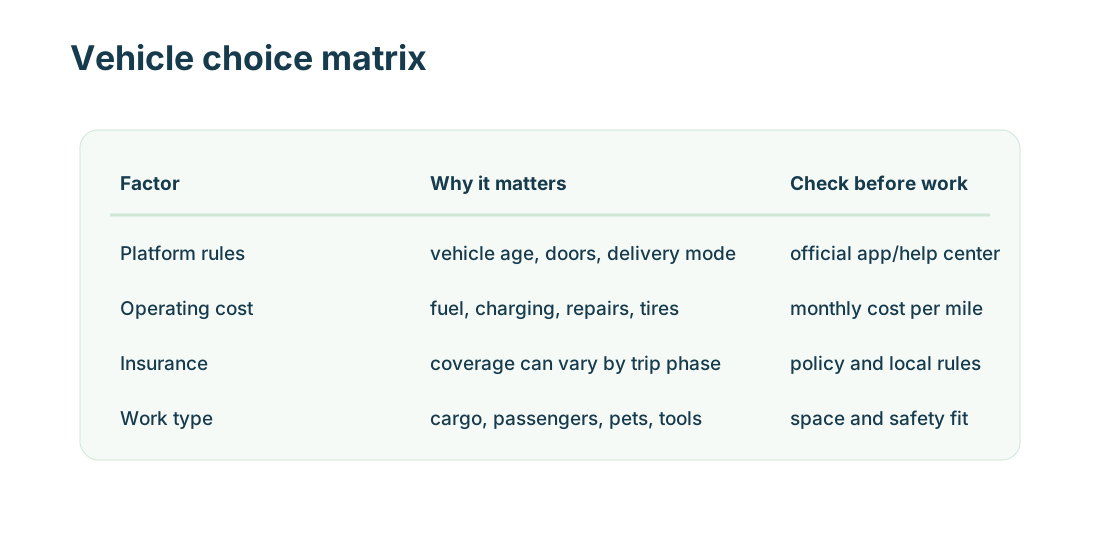
The best cars for Uber and Lyft Canada drivers are usually not luxury cars. They are eligible in your city, cheap enough to run, comfortable enough for passengers, and easy to support with vehicle records. Compare the car before you buy, rent, or lease.
Before you shop, make sure the vehicle can clear the basic rideshare filters: UberX vehicles generally need four doors, no salvaged or rebuilt title, good condition, inspection approval, and a model year 10 years or newer. Lyft vehicles need four doors and at least five seatbelts, and city or province rules can add more requirements.
Start with eligibility, then decide whether the car still makes money after fuel, charging, insurance, maintenance, tires, inspections, depreciation, and unpaid kilometres. CRA motor vehicle expense guidance and motor vehicle record guidance matter because a rideshare car is also a tax recordkeeping problem.
Quick answer: best cars for Uber and Lyft Canada
For most Canadian rideshare drivers, the best choice is a reliable compact or midsize hybrid sedan that qualifies for UberX and Lyft in your city. A Toyota Prius/Prius Prime, Toyota Corolla Hybrid, Toyota Camry Hybrid, Honda Accord Hybrid, Hyundai Elantra Hybrid, or similar efficient sedan is often easier to justify than a new luxury vehicle.
Choose a larger SUV or seven/eight-seat vehicle only if your market reliably pays enough for XL, airport, family, or premium work to cover higher fuel, tires, insurance, parking, cleaning, and depreciation. Choose an EV only if you can charge cheaply at home or near your normal driving area without losing peak earning time.
What Uber looks for in a vehicle
Uber Canada vehicle requirements are the first filter. To drive with Uber in Canada, your vehicle generally must be:
- a four-door vehicle
- 10 years old or newer
- in good condition, with no cosmetic damage
- free of commercial or Uber branding
- not salvaged or rebuilt
- able to pass a vehicle inspection by a licensed mechanic
- registered in your name
Uber requirements can vary by city, region, and vehicle option. Do not buy a car only from a national summary. Check the exact eligible-vehicle list or in-app requirement screen for the city and service type you plan to use.
Premium categories can require a newer, cleaner, or more specific vehicle than UberX. A car that is profitable for UberX may not qualify for higher tiers, and a car that qualifies for a premium tier may still be too expensive if premium requests are rare in your market.
What Lyft looks for in a vehicle
For Lyft, plan on a vehicle with four doors and at least five seatbelts, including the driver’s seatbelt. Taxis and stretch limousines are not allowed on the Lyft platform, and applicants still need to meet the regional rules where they drive.
Those regional rules matter. In B.C., Lyft drivers should be ready for a 2015-or-newer vehicle, B.C. licence plate, four doors, five to eight seats, and a commercial vehicle inspection report. B.C. rideshare drivers also need a Class 1, 2, or 4 commercial driver’s licence and three years of driving history in Canada.
In Ontario, city requirements can differ. Toronto also has its own vehicle-for-hire age rule: a PTC vehicle generally must be replaced by March 31 of the year following its seventh model year, while zero-emission PTC vehicles do not have the same model-year maximum under the city’s bulletin. That can change the economics of buying a used vehicle for Toronto rideshare work.
What to compare before choosing a rideshare car
Use the same checklist before buying, leasing, or switching vehicles:
- platform eligibility for Uber, Lyft, and the city where you will drive
- vehicle age, title status, doors, seat count, inspection, and registration rules
- rideshare insurance or platform insurance requirements in your province
- fuel or charging cost per 100 kilometres
- maintenance history, tire size, brake cost, and repair availability
- passenger comfort, rear-seat access, trunk space, climate control, cabin noise, phone charging, and infotainment that does not distract you from safe driving
- depreciation risk from high annual kilometres
- parking, cleaning, detailing, winter tire, and inspection costs
- whether a rental, lease, or borrowed vehicle is allowed
Natural Resources Canada’s fuel consumption ratings search tool is useful for comparing L/100 km ratings across models. Use it as a comparison tool, not a guarantee of your real-world fuel cost. Stop-and-go city driving, winter tires, idling, hills, air conditioning, battery range, and charging access can change the result.
Best fuel-efficient car
Best fit: a compact or midsize hybrid with strong city fuel economy and enough rear-seat space.
Examples to compare include Toyota Prius/Prius Prime, Toyota Corolla Hybrid, Hyundai Elantra Hybrid, Honda Accord Hybrid, and Toyota Camry Hybrid. These are examples, not automatic recommendations. Check the exact model year against Uber and Lyft before buying.
Hybrids tend to work well for rideshare because they reduce fuel cost without forcing charging stops into your shift. They also fit mixed work: UberX, Lyft, delivery, errands, airport rides, and personal driving.
Best used car
Best fit: a clean, inspected, reliable used sedan that still has several eligible years left in your city.
A used Hyundai Elantra, Toyota Corolla, Toyota Camry, Honda Civic, Honda Accord, or similar compact/midsize sedan can be a better business choice than a new car if it qualifies and has a clean inspection history. The key is not the badge. It is remaining platform life, repair history, insurance cost, and comfort.
Avoid buying a car with only one eligible year left unless the price is low enough to recover the cost quickly. In markets with stricter age limits, a cheap older car can age out before it pays for itself.
Best car under $10,000
Best fit: usually a delivery or short-term test car, not a long-term rideshare plan.
Under-$10,000 vehicles can be hard to justify for Uber or Lyft in 2026 because platform age limits, city age rules, inspection issues, rust, repairs, and insurance can erase the low purchase price. A low-cost Toyota Corolla, Honda Civic, Toyota Camry, or similar sedan may work only if it is clean, safe, insurable, and still qualifies for your city.
For passenger rideshare, do not buy the cheapest eligible car just because it passes today. Passenger comfort, noise, climate control, odours, dents, warning lights, and rear-seat space can affect ratings and tips.
Best luxury car
Best fit: only if your city has enough premium demand to cover premium costs.
Luxury vehicles can qualify for higher service types, but they usually bring higher depreciation, tires, brakes, insurance, repair, cleaning, and financing costs. A luxury SUV or sedan can make sense for airport, executive, or premium ride work when the app volume is proven. It is risky as a first rideshare car.
Before buying for a premium tier, confirm the vehicle qualifies for that tier in your city, not just for UberX or basic Lyft rides. Then compare premium-trip frequency against the higher weekly cost.
Best SUV
Best fit: drivers who can earn enough from XL, luggage-heavy, family, airport, or winter-market trips.
A midsize hybrid SUV can be useful when you need cargo space and passenger comfort without jumping to a large fuel-heavy vehicle. Larger SUVs can qualify for extra-seat categories, but they need more revenue to cover fuel, tires, brakes, insurance, cleaning, and depreciation.
If most of your work is short city trips, a large SUV can turn a busy shift into a weak net result. Track net pay per kilometre before assuming XL requests are worth the cost.
Best seven- or eight-seat car
Best fit: an eligible three-row SUV or minivan in a market with regular group, airport, event, or family demand.
Three-row examples to compare include the Toyota Grand Highlander, Toyota Highlander, Honda Odyssey, Kia Telluride, or similar vehicles. Treat those as starting examples. The real question is whether your city has enough higher-capacity demand to justify the higher operating cost.
If your area rarely produces XL trips, an eight-seat vehicle may spend most of its time earning basic fares while carrying SUV-level costs.
Safest car
Best fit: a vehicle with modern driver-assistance features that still keeps costs under control.
Look for automatic emergency braking, blind-spot monitoring, lane-keeping support, good headlights, winter tire compatibility, strong rear-seat comfort, and predictable handling in rain or snow. Safety features do not replace maintenance. Brakes, tires, suspension, lights, windshield wipers, and regular inspections matter more during rideshare work than a feature list on paper.
For B.C. Lyft drivers, the daily pre-trip inspection items listed by Lyft are a useful reminder even outside B.C.: brakes, parking brake, steering, lights, tires, horn, windshield wipers, mirrors, wheels, and emergency equipment all affect whether the car should be on the road.
Best resale value
Best fit: a vehicle with broad used-market demand, low ownership cost, clean service records, and no expensive surprise repairs.
Toyota Corolla, Toyota Camry, Honda Civic, Honda Accord, and similar mainstream cars often make more sense than niche luxury vehicles because buyers understand them and repairs are easier to price. But resale value is not just a brand question. High rideshare kilometres, interior wear, accident history, and missed maintenance can reduce resale value quickly.
Keep service records, inspection reports, tire receipts, cleaning receipts, and repair invoices. They help you understand cost per kilometre and may help when you sell the car.
Renting, leasing, or buying
Renting can work for a short test, a temporary repair gap, or a market trial. It is usually expensive for long-term full-time driving unless the rental cost is clearly covered by net earnings. Use the Rent a Car for Uber or Lyft (Canada) checklist before you reserve a weekly rental.
Leasing can be risky because rideshare kilometres can exceed lease limits and commercial-use restrictions can conflict with platform work. Buying gives you more control, but repairs, depreciation, financing, and resale risk are yours.
Before using any rental, lease, or borrowed car, confirm that the platform allows it and that the insurance covers rideshare use. A car can qualify in the app and still be a poor contract or insurance choice.
MyCarTracks workflow
Use MyCarTracks automatic mileage tracking to compare real vehicle cost before buying or replacing a car. Track Uber, Lyft, delivery, test drives, maintenance trips, and personal kilometres separately, then compare net pay per kilometre by vehicle and platform.
Save the records that explain the decision:
- business kilometres and total kilometres
- fuel, charging, parking, tolls, inspections, cleaning, and maintenance
- insurance, registration, lease, rental, or financing documents
- platform approval screenshots and vehicle inspection records
- notes about comfort, passenger ratings, cargo space, and downtime
FAQ
What are the best cars for rideshare drivers in Canada?
For most drivers, an eligible compact or midsize hybrid sedan is the safest starting point. It keeps fuel cost low, fits basic rideshare categories, and usually has enough comfort for passengers. Larger SUVs, EVs, and luxury cars need stronger local demand to justify their higher costs.
What is the oldest car you can use for Uber or Lyft in Canada?
It depends on the platform, city, province, and service type. For UberX in Canada, plan around a current general baseline of 10 years old or newer. Lyft rules vary by province and city; B.C. Lyft requirements list 2015 or newer, and Toronto has its own PTC vehicle-age rule. Always check the current app or official city page before buying.
Is a hybrid better than a gas car for Uber or Lyft?
Often, yes, if the hybrid qualifies, is reliable, and does not cost too much to buy or repair. Hybrids can reduce city fuel cost without requiring charging stops during peak rideshare hours.
Is an EV good for rideshare in Canada?
An EV can work well if you have cheap, reliable charging and a city where the vehicle qualifies long enough to justify the purchase. It can be weak if charging time replaces high-demand shifts, winter range is a problem, or public charging is expensive.
Should I buy a new car for rideshare?
Usually, start with a clean used car unless you have already proven your market and hours. A new car can reduce repair risk, but depreciation and insurance can erase rideshare profit quickly.
What to read next
- Delivery and Rideshare Driver Earnings (Canada)
- Gig Driving Guide (Canada)
- Rent a Car for Uber or Lyft (Canada)
- Rideshare Apps Like Uber and Lyft (Canada)
- CRA Mileage Log Requirements (Canada)
Sources
- Uber Canada vehicle requirements
- Uber Canada driver requirements
- Lyft Canada driver requirements
- Lyft British Columbia driver information
- City of Toronto vehicle age interpretation bulletin
- Natural Resources Canada fuel consumption ratings search tool
- CRA motor vehicle expenses
- CRA motor vehicle records